.svg)


.svg)





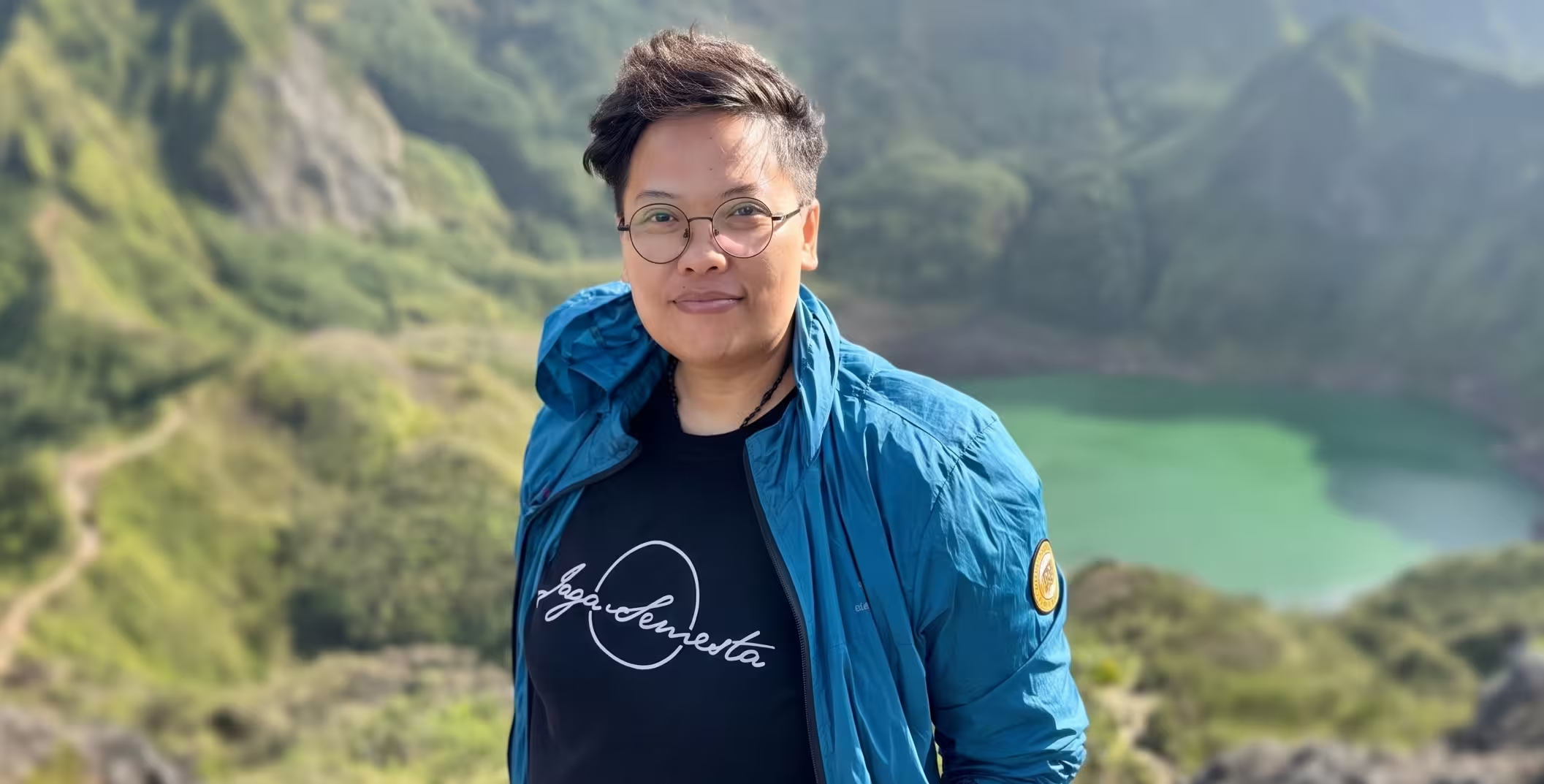
Fainta S. Negoro
On leaving a career behind, chasing springs across Java and Bali, and building a movement before Indonesia's water crisis becomes irreversible.
Water comes out of the earth like a newborn. Pure. We can protect that.

Who is our guest?
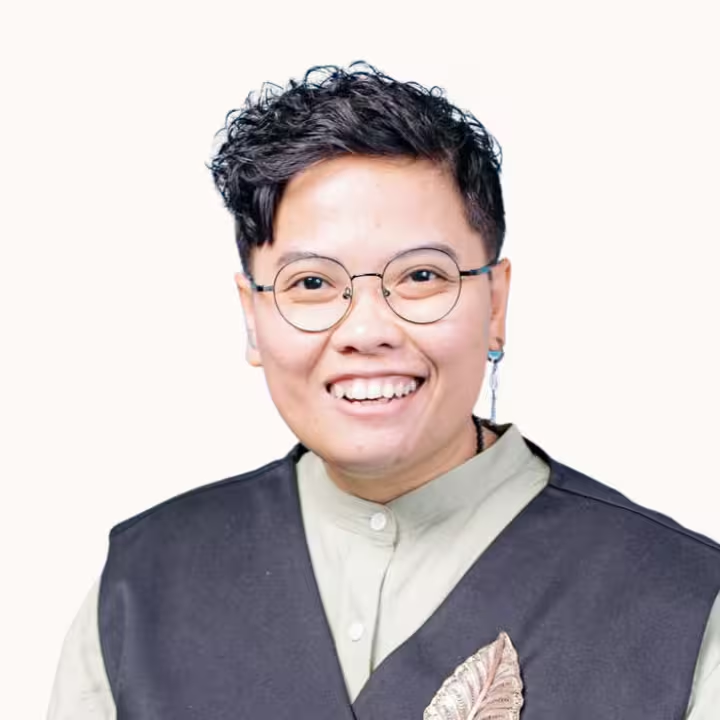
Fainta S. Negoro is a hydrogeologist from Java, Indonesia, who spent 20+ years in corporate water stewardship before walking away to found Jaga Semesta - a grassroots movement restoring springs and recharging aquifers, community by community.
Why are we interviewing our guest?
Corporate programs, national policies, large-scale plans - none of it was moving people. So she walked away and built something else: a volunteer movement restoring what Indonesia is quietly losing.
What to expect
Expect a journey from childhood water scarcity to fieldwork across Indonesia and an honest look at what it takes to restore springs, mobilize communities, and reconnect people to water.
The interviewer

Oliver Wegner
After 25+ years in tech, I'm dedicating my time to something that truly matters: water, our planet's most vital and overlooked resource. 💧 I'm driven by curiosity to meet changemakers whose insights and stories might inspire us all to reconnect with water.

You grew up experiencing water scarcity firsthand. What did that feel like as a child and how did it shape your conscious relationship with water?
I was born in a small village on the flank of Gianti Mountain in Central Java. And water scarcity there was not abstract. It was physical, it was a feeling. The feeling of waiting. Waiting for the rain, waiting to bathe, waiting for adults to decide how much water we could use that day.
We spent maybe 30% of our time just collecting water from the river. When I grew up and went back, I realised how small that river actually was. As a child it seemed enormous.
Water became emotional. You stop seeing it only as a resource - you see it as dignity, safety, health, and even conflict. It made me understand that our relationship with water is not only about access. It's also about responsibility. Water is not only something we consume. It is something we must also nurture, and allow to return the way it naturally should.

After 20+ years in hydrology and corporate water stewardship, you walked away. What was the moment or the realization that made staying feel impossible?
I worked with systems, policies, large-scale programs - some reaching 50,000 to 60,000 households. But over time I felt a growing gap between what we discussed in the meetingroom and what was happening on the ground. We shared our findings. We showed the data. And some official said: "Oh, we already know that." And then - nothing.
That hit me somewhere. And then my son, after listening to me complain on a long call, said: "If you feel like you cannot rely on anyone else, why don't you do it yourself?" I was stuck with that.
So I resigned. And I started a three-month expedition across Indonesia because showing data to governments wasn't helping. I needed to show something people could see, hear, and feel. And then say something. Do something.
In 2023 you travelled across Java and Bali to document springs and rivers yourself. What shocked you the most, and what gave you hope?
One of the biggest springs in Pasuruan used to flow at 5,000 litres per second. In 20 years it dropped to under 3,000. Half gone. Some springs were piped directly to cities while the villages around them ran dry. Others were converted to hotel swimming pools. I didn't get it. And then I realised the village just wanted income. Still - it shocked me.
What also shocked me: drilling. In Indonesia, if you own land, you can drill a well. The enforcement on groundwater exploitation is weak. Many springs are drying up simply because of that.
What shocked me in a positive way was the hope. Everywhere we went, people wanted to talk. The elders remembered exactly how springs looked in the past, what trees grew there, what changed. That memory is still alive. The moment we opened the space, everyone had a story - "In my village the spring used to be this big." That energy was everywhere we looked.
You founded Jaga Semesta - a volunteer movement activating communities across Indonesia to protect water sources. How do you get people to show up for their springs and truly see why it matters?
Storytelling. It's been part of humanity since the beginning but it was never in our hydrology curriculum. So I try to humanise hydrology. Instead of showing a publication about aquifer typology, we show an artesian spring flowing. Beautiful. And people feel: I don't want to lose that.
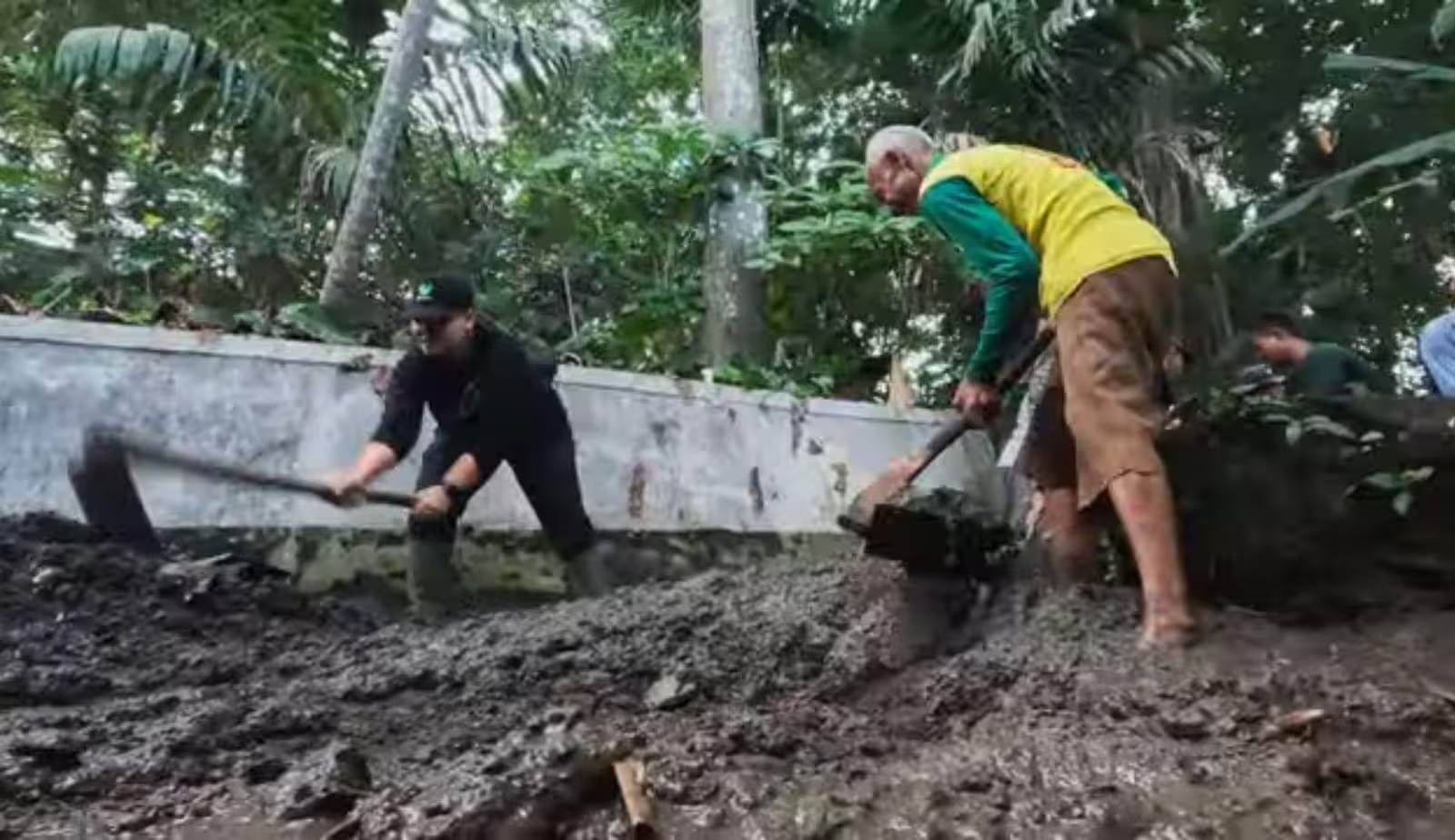
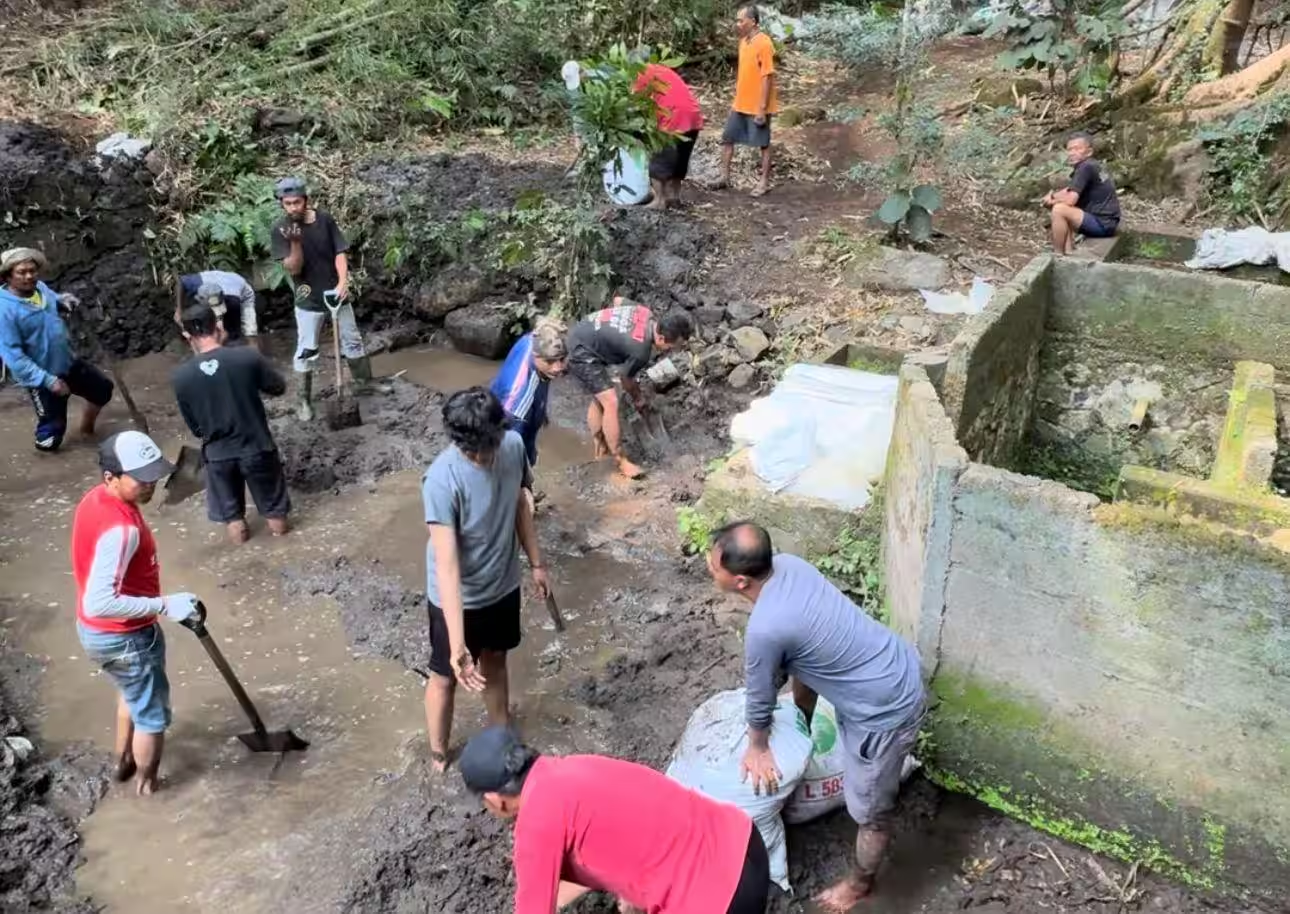
Our first real action was in Boyolali, Central Java. A spring had been abandoned because of a conflict between two villages. We talked to the elders, cleaned the sediment - five hours, and by lunchtime the spring was flowing again. Not as big as before. But the reconnection is what matters.
Then we opened a simple Google Form - whether communities had the intention to do something in their village. The response was enormous. "I want to do it in my village. What should I do? How do I start?" It had nothing to do with knowledge or skill. Just confidence and courage. You don't need to be a hydrologist. You just need to know what you want and what success looks like.
And one more thing we never say at Jaga Semesta: that we empower communities. They already have the power. We just show up alongside them - to make sure they can use their strength in the way they want to use it.
Interview break
Get to know our guest
Learn small facts about our interviewee.
Favourite place
Favourite Book
Favourite song
One piece of advice
Biggest challenge
Favourite movie/series
You have already mobilized more than 550 volunteers. What does a movement look like when it's built on zero budget and voluntary effort and what does it take to keep that work sustainable - and what's your vision for 2040?
First: it's not really a zero budget. We don't have money but in Malang we had 30 people showing up every morning for 12 days. Different people, every day. That is not nothing. We are not poor just because we have no money.
What keeps it going is structure. We have social media to share knowledge and skills. We have WhatsApp groups where everyone can learn at their own pace. And we divided the community into chapters, so people living nearby can meet in person, support each other, and build a real support system.
And what keeps 550 people showing up? Value alignment. Every volunteer has their own reason. Our director of photography wants to capture the expression of human beings. Some are navigators, some are search and rescue, some are just happy being around nature. My son was 13 when he joined. What connects us is not a job description. It's the story. If our activity doesn't serve your interest, it won't have value for you. So we make sure it does.
By 2040, we want communities across Indonesia to be the first witnesses of their own water. Monitoring their springs, reporting changes, protecting recharge areas - not because someone told them to, but because they feel it matters.
Bali in particular holds water as sacred in its temples and rituals - yet its rivers and springs are polluted and under serious threat. How do you make sense of that contradiction and is it a matter of consciousness?
Bali is not alone. Many places have a sacred relationship with nature in culture and a destructive one in practice. In Bali, water is identity. It's ritual, purification, everything. And at the same time: tourism, waste, land conversion, and over-extraction are putting it under serious threat.
So yes, it's partially a matter of consciousness. But consciousness alone is not enough. If the economic system rewards extraction, if waste management fails, if local communities lose control over their water source, the sacred value cannot protect water by itself.
For me the question is: how to reconnect the sacred with practical governance? Sacredness should not end at ceremony. It should continue into how we build, farm, consume, dispose. When it's only practiced in ritual and not embedded in the system - it's not enough.
If someone watches or reads this in Berlin, São Paulo, or New York. What do you want them to feel, and how can they be part of what Jaga Semesta is doing?
I want them to feel that this is not far away. When your tap stops flowing, the crisis has already started and by then it's too late. The root issue is the same everywhere: we broke our relationship with the water cycle. We take what we need and stop asking where it comes from.
But I also want them to feel hope. Indonesian villagers with no money in their pocket are restoring springs. Restoration is possible. Small interventions, done consistently and collectively, can bring water back.
Start by being conscious of your own body. When you feel like you need to be hydrated - drink. Even myself, I forget sometimes. Then ask: where does my water come from? Where does it go? What can I do to help it return safely to the earth?
And remember: the biggest place of worship on this planet is not on the ground - it's in the sky. What we pollute in Indonesia reaches your groundwater. What happens in your country affects us. We are in the same water system. Protecting water is not Indonesian work. It's humanity's work.
Key Takeaways & Quotes
What stayed with us from this conversation.
Water is not just a resource - it's a relationship we broke and can rebuild. Fainta left a corporate career, listened to elders, and founded Jaga Semesta - a nationwide movement. She learned that storytelling moves people where data never could. Restoration is possible. It starts with one question: where does my water come from?







Discover more interviews like this

An interview with
Jean-Charles de Biolley
An interview with
Dr. Peter H. Gleick

An interview with
Yanny Peñaloza

An interview with
Justina Muchelenje

An interview with
Zosia Wiśniewska

An interview with
Finnian Mollet

.svg)
.svg)