.svg)


.svg)





Finnian Mollet
On turning water into fuel, why hydrogen could change Bali's transportation, and what it takes to bring a proven idea to a place that's never tried it
I fell in love with engines and motorbikes, but I also really care about the environment.

Who is our guest?
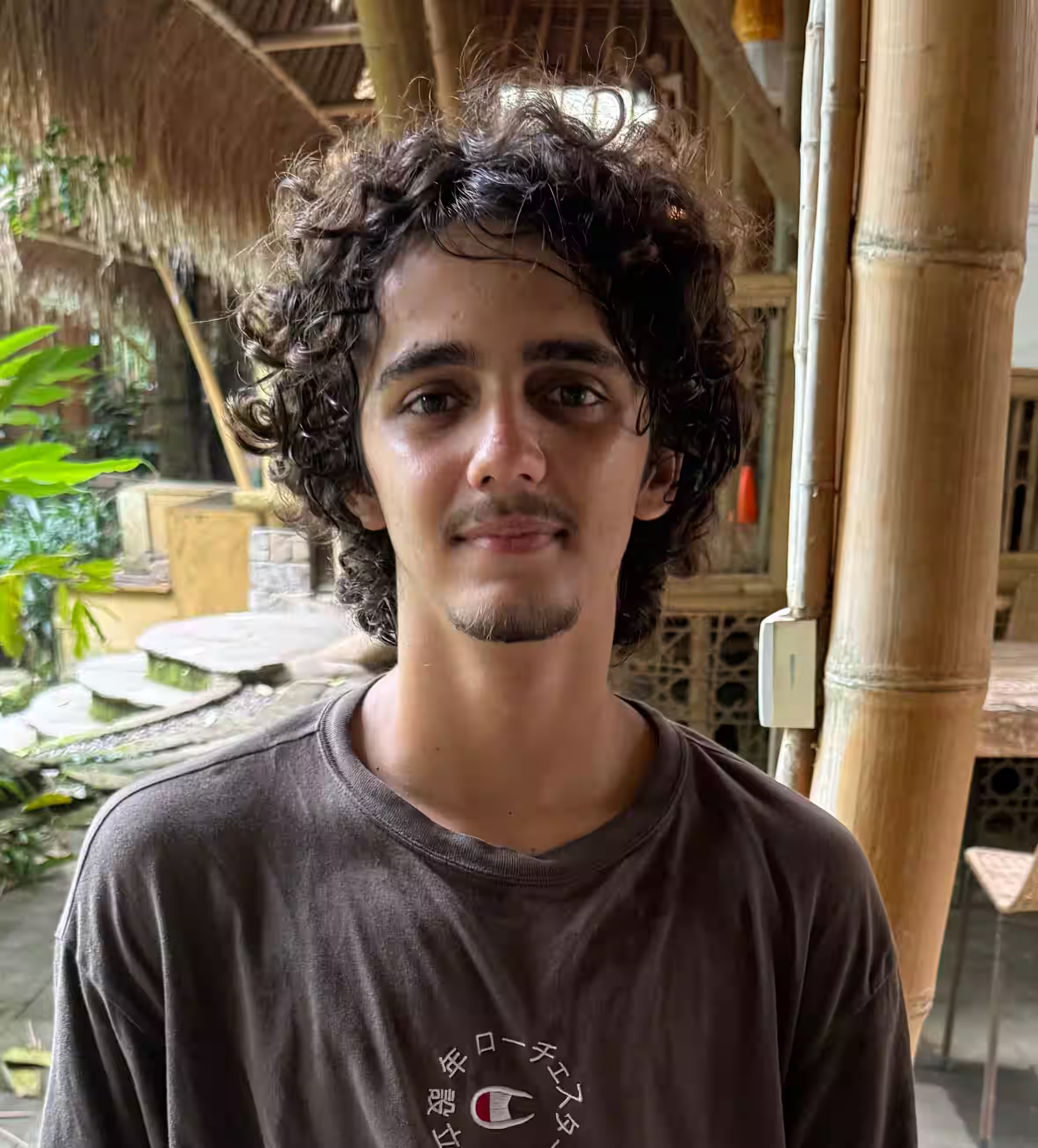
Finnian is a 17-year-old 12th-grade student at Green School Bali, where he's spent the last 12 years. Originally from Portugal, he's an engineering enthusiast building a hydrogen-powered engine system that could transform how motorcycles run on the island.
Why are we interviewing our guest?
Finnian represents a generation tackling climate solutions with hands-on innovation. His project bridges passion for mechanics with environmental responsibility - showing how you turn 'what if' into 'watch this'.
What to expect
Expect stories, sparking prototypes, research paper struggles, and why sometimes the best engineering breakthrough comes after you step away from your desk.
The interviewer

Oliver Wegner
After 25+ years in tech, I'm dedicating my time to something that truly matters: water, our planet's most vital and overlooked resource. 💧 I'm driven by curiosity to meet changemakers whose insights and stories might inspire us all to reconnect with water.

What made you connect to hydrogen power specifically?
Well, initially I really wanted a motorbike, and I knew I wanted to do something about renewable energy - that's always been a topic of interest to me. Then I remembered this experiment I did in a middle school science class where our teacher showed us how water could be separated into two hydrogen atoms and one oxygen atom. And that's when it all clicked.
I immediately did some research and found out that this idea of creating cleaner engines with hydrogen was not only possible but many had experimented with it. We're on an island surrounded by water, the most abundant resource on Earth. Why not try and see if we can turn water into fuel, and then the output of that fuel is water again? That's how it really started - creating a cycle.

Bali has unique energy and transportation challenges. What surprised you most when you started researching?
Bali has a huge dependence on tourism and and because of that, there's a lot of transportation and local people are forced to sell their land for cash to keep up with growing expenses. Part of what really drove me in this project was seeing how we could make our fuel last longer ultimately making it cheaper and cleaner for all that use it.
What really shocked me in a positive way was when one of my mentors found a group on Serangan Island with support from the government researching and prototyping a fully hydrogen village. They have very similar goals to mine but have the extra challenges of implementing it fully into a community and educating said community on a new way of living. Already here in Indonesia, there's a group actively trying to reach this goal. That was the biggest surprise.
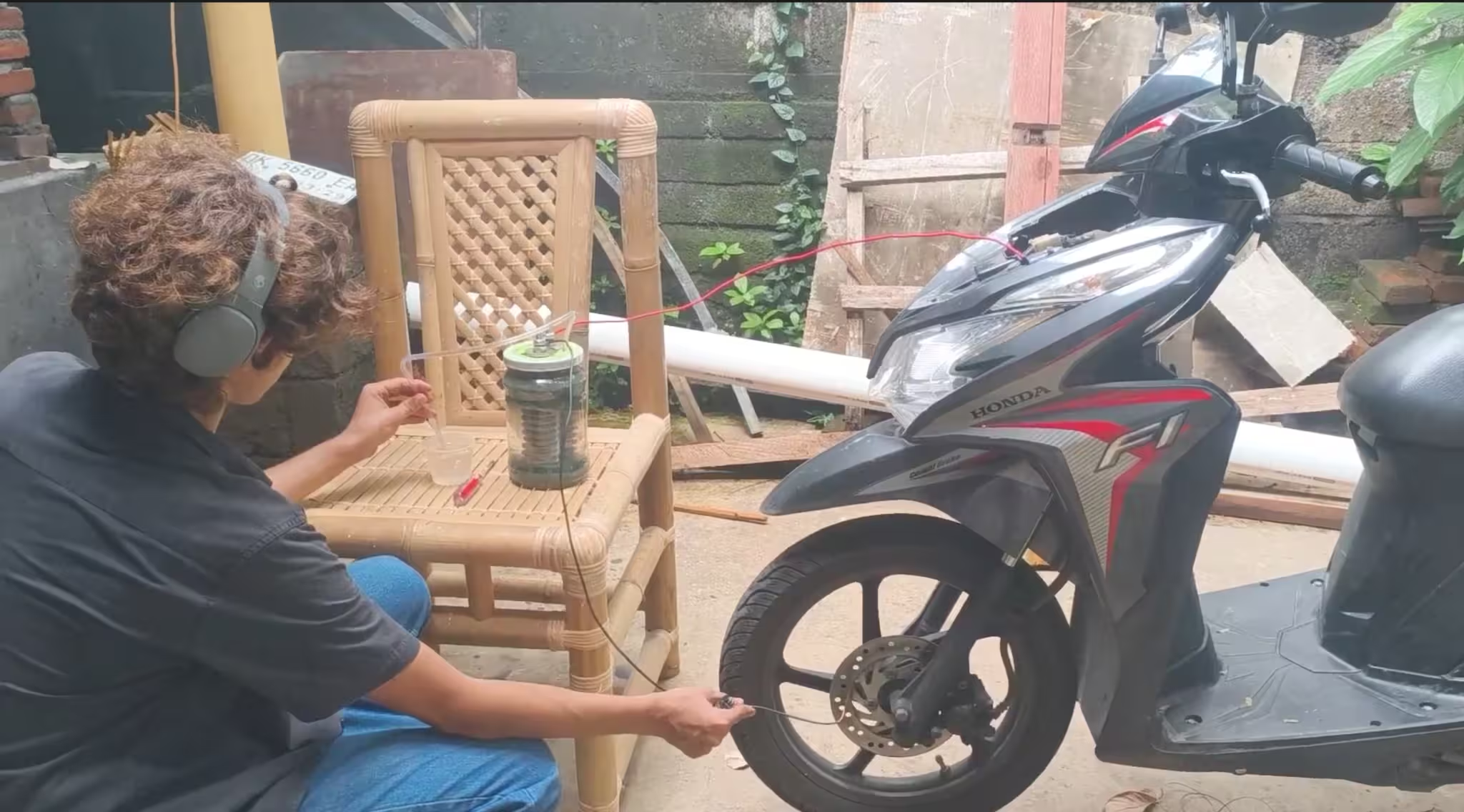
Walk us through your Green Stone Project - what are you actually doing?
My Green Stone is looking at how we can make engines run cleaner and more efficiently to provide a stepping stone for the ultimate goal of having a net zero world. It's currently unrealistic to assume we can convert every part of our world logistics with electric vehicles. So by researching the potential of hydrogen, I want to make our engines run cleaner to buy us time and refurbish the old so that we can meet that goal.
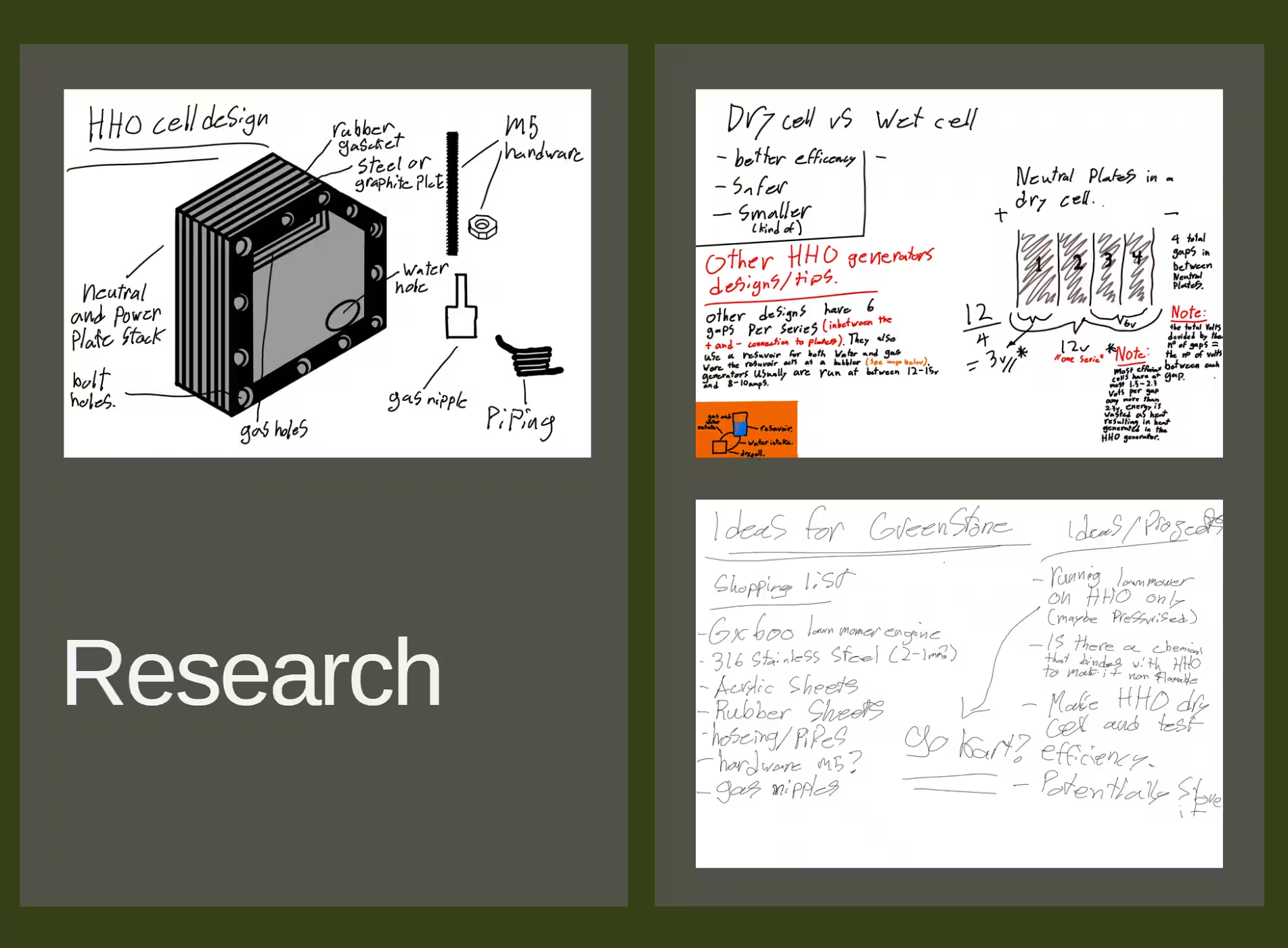
I spent the better part of my year in 11th grade researching and fundraising for this project. I set up a GoFundMe - lots of funding came from family in Europe, my cousins, aunties, uncles. I'm really thankful for them. I couldn't have gotten here without them. I've spent approximately 15 million rupiah (around €950) buying materials - special metals, rubber, acrylic, tools. Most I had to order from Jakarta because Bali is more touristy. They've got the bare minimum to keep tourism going, but when you need technical stuff, you need to get it from there. With all that information, I went to prototyping different HHO cells which split water into HHO gas.
After much trial and error, I arrived at my fifth prototype. The hardest part was figuring out what metal to use. I tried graphite first, but production was very slow. After digging back into research, I found 316L stainless steel, which is perfect and used in industrial applications. As soon as I figured that out, huge steps were made - from tiptoeing to running. My latest prototype produces around 300-700 milliliters per minute with a compact design and minimal power.
How do you balance this with regular school life?
I'm lucky to have so much support not only from family and friends but also from school. This is my capstone and part of my graduation, so we're provided four hours a week to work on it. Many of my peers have projects about combating the waste problem, reducing energy through AC, water crisis, issues caused by tourism. We all have the common goal of finding an issue we're passionate about and doing our best to address them.
Admittedly with such large projects, it can be tricky to balance this with regular school life and my personal life as well. I balance all of this by making sure I get enough time to relax and find joy in most of my other school assignments. I've learned not to be so hard on myself. I used to think if I don't fall asleep reading papers, I'm not trying hard enough. But you need breaks - you need to step back, do something else. I enjoy playing frisbee and volleyball, spending time with friends, listening to music. Those breaks help me come back with fresh perspective.
Interview break
Get to know our guest
Learn small facts about our interviewee.
Favourite place
Favourite Book
Favourite song
One piece of advice
Biggest challenge
Favourite movie/series
What's been the hardest part that nobody warned you about?
The hardest part has been not having a mentor in person who knows a lot about this topic. All my peers have somebody there - "let's meet up and work on it together." Meanwhile I'm going back to my research papers by myself. I'm best friends with AI at this point. That can be very demotivating.
The second hardest thing is the stress of not being able to achieve what I really want out of this project and to not get significant results. That definitely bears heavy on my mind. But it's taught me perseverance - to really push on when I hit a wall.
How has working on this project changed you?
Before I started this project, I knew that when I graduated I wanted to do something around engineering. But this project has shown me how much I really care about finding a solution to this issue that could be applied all over the world. Just thinking about how this could change people's lives makes me really excited for what the future holds, even if it means I go down a different route with alternative fuel. I got stuck in this climate anxiety - feeling like no matter what you do, you can't make an impact.
But the philosophy I've built is: as long as you do something you really care about, and use it as a tool to affect the world in a positive way, that's the most important thing. You doing that is already more than enough. Just last year I was much more reclusive and shy, but this project has really built up my confidence and taught me that talking to people is so important. I like to think I have all the great scientists of the past rooting for me.
If Gen Z wants to understand clean energy solutions for their communities - where should they start?
Learn and find something that you care about or love. It doesn't matter what it is, or even if it's directly linked to climate. As long as you take what you love and use it as a tool to affect the environment in some positive way, you're already helping. When you go out of your comfort zone and learn about different issues around the world, what seems like common knowledge to one community is something amazing and new to another. Just because it isn't suitable in country A doesn't mean it's not suitable in country B.
If we just say "that didn't work, let's give up," we're never going to change. There's no point worrying about whether we're doing enough if we don't make an effort. If everyone has just one idea and goes halfway with it, that's already so much. I might be the only one in my class doing a project like this, but when you talk to people all over the world, there's going to be at least one other person doing something similar. You're never alone.
Key Takeaways & Quotes
What stayed with us from this conversation.
Finnian's hydrogen engine project shows how Gen Z tackles climate problems - hands-on, resourceful, undeterred by setbacks. By bringing hydrogen technology to Bali with fresh perspective, he's demonstrating that solutions don't need reinventing, just relocating to places that need them most.







Discover more interviews like this

An interview with
Jean-Charles de Biolley
An interview with
Fainta S. Negoro
An interview with
Dr. Peter H. Gleick

An interview with
Yanny Peñaloza

An interview with
Justina Muchelenje

An interview with
Zosia Wiśniewska

.svg)
.svg)