.svg)


.svg)





Justina Muchelenje
On how the things we buy every day quietly drain water from communities far away - and what it means to demand fairness.
Everything you own has a water story. Do you know yours?

Who is our guest?
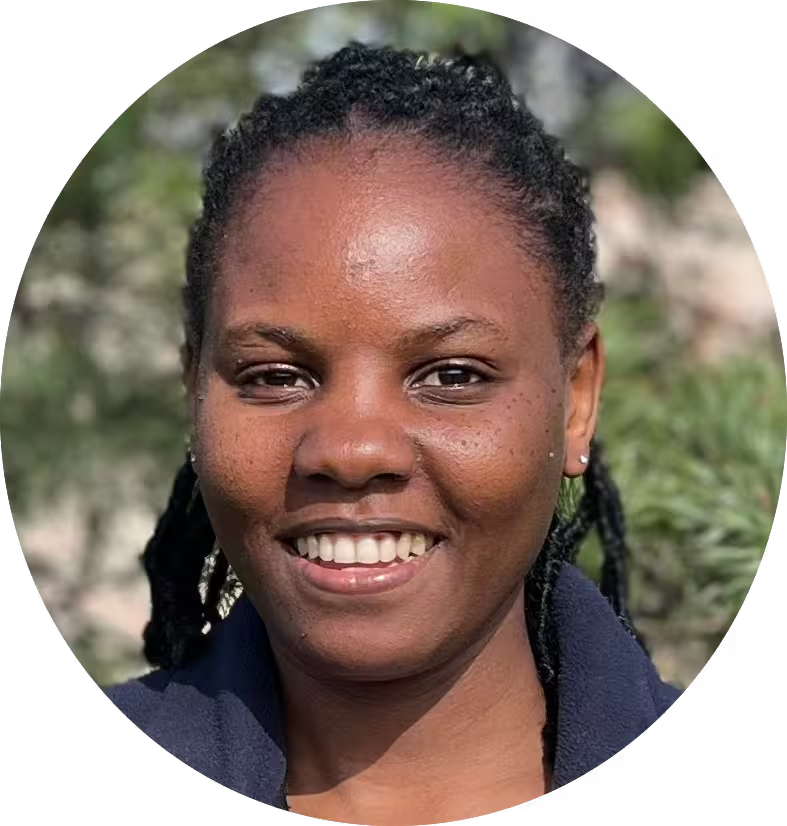
From Zambia to Oxford - Justina Muchelenje's path through Environmental and Sanitation Engineering led her to an MSc in Water Science, Policy, and Management. At Water Witness International in Edinburgh, she now works on the Fair Water Footprints programme, making water use in global supply chains sustainable, equitable, and fair for all.
Why are we interviewing our guest?
From cocoa in West Africa to asparagus fields in Peru, the products we consume carry a hidden water cost - often paid by communities with no clean water of their own. Justina is tracking the evidence trail.
What to expect
Expect hard numbers, real stories from Malawi to Peru, and a clear call: your voice at the end of the supply chain is more powerful than you think.
The interviewer

Oliver Wegner
After 25+ years in tech, I'm dedicating my time to something that truly matters: water, our planet's most vital and overlooked resource. 💧 I'm driven by curiosity to meet changemakers whose insights and stories might inspire us all to reconnect with water.

Most people think their 'water use' ends at the tap. What are they missing?
When I was starting out in my career, I used to think our relationship with water ends at the tap too. I didn't even know where my water was actually coming from. But think about it - the water from the tap must be coming from somewhere, and the water that leaves your house has to go somewhere, be treated, and come back again. It is a cycle.
And then there is everything else. The food we eat, the clothes we wear, all the different products we use - all of those take water to produce. One avocado takes about four bathtubs of water to produce. For 100 grams of chocolate, it actually takes about 16 bathtubs.
Once you realise that, you see that water is embedded in almost each and everything we use on a daily basis. It does not just end at the tap - it is invisible, but it is everywhere.

What does a 'fair water footprint' actually mean and what makes it unfair?
Most people have heard about carbon footprints, but water is different. Water is a finite renewable resource - the idea is not to use less of it, but to use it in a sustainable, equitable and resilient way that protects future generations.
A fair water footprint means that in the way water is used within supply chains - producing food, materials, everything we use - there is zero pollution, there are sustainable and equitable water withdrawals, nature and ecosystems are protected, and everyone has access to water, sanitation and hygiene (WASH). It also means building resilience against floods, droughts and water conflicts.
In short, a water footprint becomes unfair when the benefits are felt by some while the risks are pushed onto other people, other communities. Think of avocados grown in water-scarce regions - we enjoy them at the supermarket without thinking about the communities who cannot access clean water because it is being used to grow them.

Can you take us into a real situation where an unfair water footprint has destroyed lives or forced people into an unnecessary change?
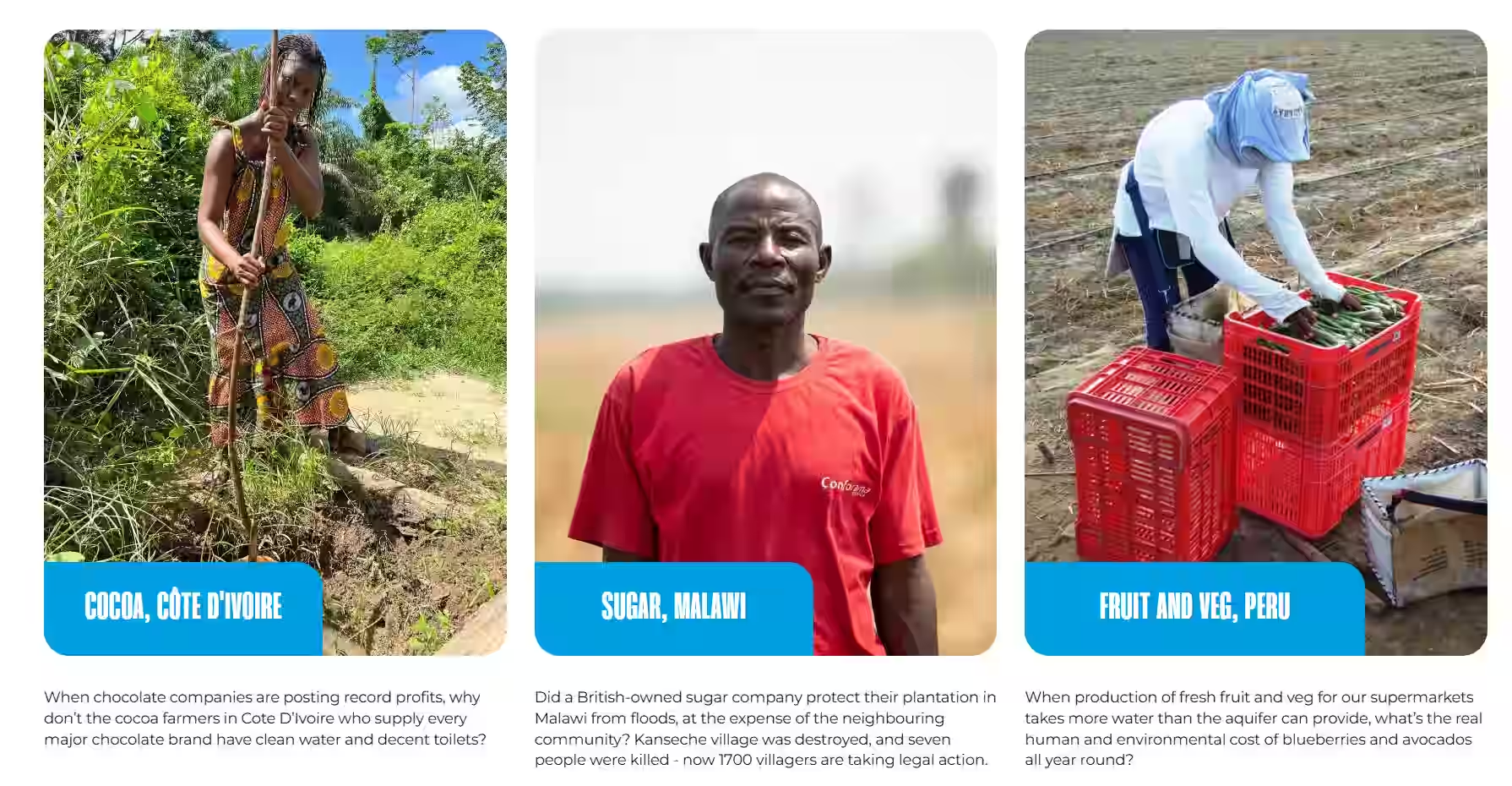
We have quite a number of examples from our research. The first is cocoa in West Africa. West African countries account for about 40% of the cocoa used by almost every brand you can think of. In those farming communities, the human right to water and sanitation is very limited. A multi-billion industry that we enjoy every day is actually impacting people's most basic rights.
The second example is Peru's Ica Valley - one of the driest places on Earth, stretches of desert and barren land. Yet this is one of the world's top producers of asparagus, blueberries, and grapes. Groundwater is being pumped to irrigate the farms, while the communities working there still have no access to water and sanitation.
They have to buy water from informal markets because they do not have safely managed water on their premises - and yet they are surrounded by a multi-billion business producing food for the Global North. That is what an unfair water footprint looks like in real life.
Water Witness investigates, campaigns, and supports legal action. How does that combination actually create change?
It is all about evidence. The evidence we generate is meant to create impact and change the political narrative - to push how people view water beyond the tap. Without it, why would anyone demand a fair water footprint? You need the proof.
In Malawi, we used research to understand the impacts on communities from a sugar plantation. There is an actual legal case in UK courts right now, looking at how a company built its own climate resilience while leaving the community vulnerable when a flood hit. A ruling on corporate accountability in that case would mean a great deal for human rights protections in supply chains.
We also run public campaigns - we just launched 'Inequality by the Gallon.' And we work inside countries in Africa like Ethiopia, Malawi, Tanzania - co-designing solutions with governments and communities, because if you are the one impacted, you need that agency to speak up and demand your rights. All these layers together are how we shift political and personal narratives.
Interview break
Get to know our guest
Learn small facts about our interviewee.
Favourite place
Favourite Book
Favourite song
One piece of advice
Biggest challenge
Favourite movie/series
Fast fashion, food, phones - young people in the Global North consume all of these. How directly does that connect to water stress in places like Malawi or Ethiopia?
The connection is very direct and much stronger than most people imagine. Because of climate change, places like Malawi and Ethiopia already face more severe droughts and floods - water is not as available as it used to be. And then on top of that, each product we consume from those water-stressed regions consumes water that should be available to communities.
Think about a T-shirt. The cotton may have been produced in Ethiopia. Our research looked at the full life cycle and water footprint of the textiles industry there. And beyond that - the secondhand clothes we discard also end up in the Global South, carrying their own water footprint.
With phones, I am currently focused on mining supply chains. The push towards the green transition is driving demand for critical minerals, but in the communities where those minerals come from, the impact is acid mine drainage, river pollution, water insecurity. The vulnerability is shifted from the companies mining those minerals onto communities that cannot protect themselves. Our consumption is driving all of this and the brands we know and love can do better.
Beyond awareness, how does Water Witness turn young people into real advocates for fair water footprints - and what have you learned about the things that work?
One thing I want to say upfront: do not assume young people already understand what we are talking about. The language has to be accessible, and just having the information does not mean someone is going to act. Water Witness is building a movement that goes beyond learning to actually shape how the issue is addressed.
The fair water footprint agenda grew out of the Glasgow Declaration for Fair Water Footprints, signed at COP26. Youth groups are already among the signatories. In our cocoa report, Earth Guardians - one of our youth signatories - co-authored the report and did data collection on the ground in Côte d'Ivoire.
Last month, we brought young people to London for a water and trade conference at Chatham House, followed by a co-design workshop. What came out of that: a youth strategy for the next 18 months, and an idea to develop a game that makes your full supply-chain water footprint interactive and personal. Because once you visualise it - my breakfast avocado came from Peru, my sugar from Malawi - it hits differently.

If a young person in London, Berlin, or San Francisco wants to move from passive to active - what's the one thing you'd ask them to do today?
Your voice is your strongest asset to actually ask for the accountability owed to communities within supply chains. You sit at the very end of the supply chain - that gives you leverage.
Think about it this way: if the minerals used to produce your phone had polluted a river in your community for years, how would you demand change? Think about it as if it were your own story. Then talk to your brands, write to your supermarkets, ask them how they are ensuring fair and sustainable water footprints and how they are protecting human rights.
For people in the UK, sign up to the 'Inequality by the Gallon' campaign and demand a UK Business, Human Rights and Environmental Act. Internationally, educate yourself and get involved in our youth strategy work. The fastest way to stop being part of the problem is to demand change. The power is within you.
Key Takeaways & Quotes
What stayed with us from this conversation.
Water is invisible in everything we consume - one avocado takes four bathtubs to grow, one chocolate bar sixteen. Across global supply chains, communities lose access to clean water so others can enjoy their products. Knowing that changes everything - and demanding fairness, through your voice, your brands, and policy, is where real change begins.







Discover more interviews like this

An interview with
Jean-Charles de Biolley
An interview with
Fainta S. Negoro
An interview with
Dr. Peter H. Gleick

An interview with
Yanny Peñaloza

An interview with
Zosia Wiśniewska

An interview with
Finnian Mollet

.svg)
.svg)