.svg)


.svg)





Scarlett Gonella
On Bali's plastic crisis, its impact on water safety, and why a solution literally falls from the sky
I drink from the tap every single day in England and never get sick. So why can't you have that here?

Who is our guest?
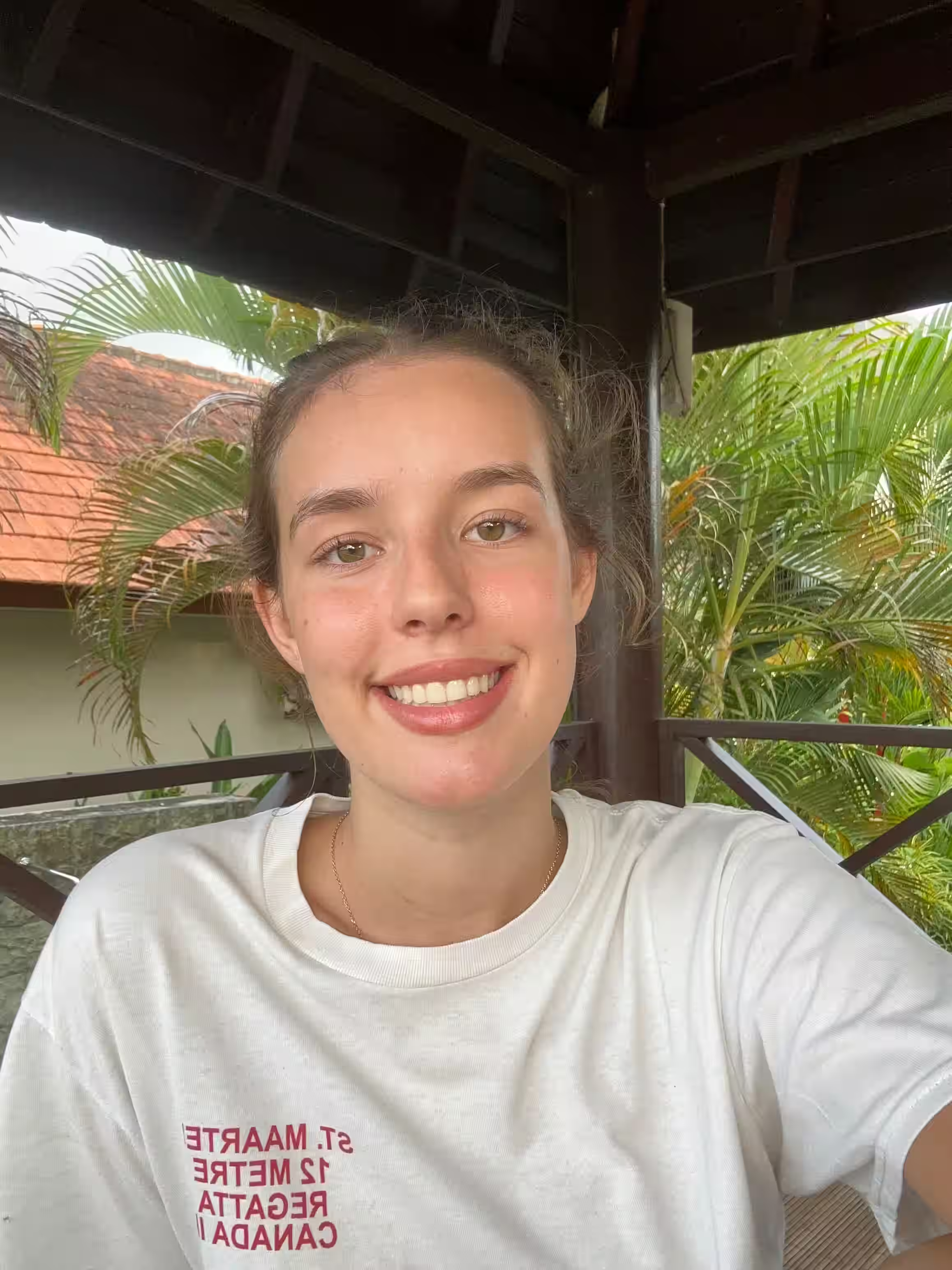
Scarlett Gonella is a 17-year-old Grade 12 student at Green School Bali completing her two-year Green Stone Project on water accessibility. Originally from Kent, England, she moved to Bali in summer 2024 and is now building rainwater harvesting systems to combat plastic pollution and water scarcity in rural Indonesian communities.
Why are we interviewing our guest?
Scarlett represents a generation refusing to accept that clean water should come at the cost of environmental destruction. Her project bridges immediate action with long-term change.
What to expect
Expect honest reflections on stepping out of comfort zones, the reality of Bali's water crisis, and why official statistics don't match what people actually experience.
The interviewer

Oliver Wegner
After 25+ years in tech, I'm dedicating my time to something that truly matters: water, our planet's most vital and overlooked resource. 💧 I'm driven by curiosity to meet changemakers whose insights and stories might inspire us all to reconnect with water.

What made you look at Bali's water and think "I need to do something about this"?
Honestly? It wasn't even my idea at first. In Grade 11, we presented what we are working on to John Hardy* at Bambu Indah, and I was totally lost about what to do for my project. So John had this list of ideas for students who didn't know what to do, and he mentioned investigating Aqua by Danone.That really stuck with me because I'd seen the plastic pollution everywhere in Bali, and I knew how bad it was. But as I went along, I realized Aqua isn't the only water brand out there. They're just a symptom of the wider problem.
The real problem is that 92% of people supposedly have "access to safe water" in Bali—but if you ask anyone living here if they drink tap water, they'll say no. That wording makes it sound like you can drink tap water, but it just means they have access to piped water. You still can't drink it.
* Founder of the Green School

Bali's plastic problem is massive - what surprised you most when you started digging into it?
I saw plastic on the side of the road all the time, but when you start looking at the data, you realize how massive the problem actually is. Last week I visited a Plastic Bank location - it's an enterprise where collectors bring in plastic that gets turned into pellets and sold to pharmaceutical companies. The man there said they collect 100 metric tons (100.000 kilos) every month. A whole big bag from one collector was just six kilos.
There's so much plastic in Bali that you think they're doing a great thing, but they need so many more people collecting. You can't really wrap your head around the scale of how bad it is. And then only like 10% of plastic actually gets recycled. The other 90%? Landfill or burning. When you burn plastic, 2.9 liters of CO2 gets released. Sometimes in the morning I open my door and have to shut it immediately because the air is so thick and smells terrible. It's all connected.

Walk us through your Green Stone Project - what were the first steps and what are you tackling now?
Back in December 2025, I launched a petition about the issue, the consequences, and solutions. I recently changed the wording to make it more digestible so it would actually resonate with people. Then I heard about a company in Colombia through my mom. They build rainwater harvesting systems using recycled three-liter bottles with Sawyer filters attached to the bottom, so people can drink straight from it.
It tackles both things - reusing plastic bottles and stopping people from having to buy bottled water. During spring break in March, I'm going to a really remote school in East Lombok that has very poor access to water - just a hole in the ground with a pipe and a small filter. Getting there took 13 minutes by bus up the mountain, then 20 minutes in a truck, then a 30-minute walk. I'm going back with my mom and sister to build a rainwater harvesting system there. Alongside the infrastructure, I'm also developing an educational component for the students about water safety, health, and plastic pollution.
Have you seen any changes yet? Even small ones?
There haven't been massive changes yet - the big impact will come when I go to that remote school in East Lombok during spring break and actually build the rainwater harvesting system there. That's when we'll see real, tangible change for that community.
Right now, the impact is more about awareness from my petition. Hopefully there will be enough signatures to make a real change and for people within Indonesia to recognize the issue. I'm also building a recharge well in a local Subak to replenish groundwater, which is pretty badly depleted here. That's been in the works since October 2025, and it's only now getting funded and starting construction. So the visible changes are still coming - they just take time.

Interview break
Get to know our guest
Learn small facts about our interviewee.
Favourite place
Favourite Book
Favourite song
One piece of advice
Biggest challenge
Favourite movie/series
What's the hardest part that nobody warned you about?
Project management, honestly. I was not used to having to do everything on my own. The teachers support you, but they don't actively go out and do things for your project. Sometimes I really just didn't know what to do - who to reach out to, how to do something, or I wasn't confident enough. Last year I found that really hard, but I've gotten a lot better this year.
Progress has felt slow because of logistics, funding, and things just taking time. Implementing long-term solutions is quite hard when you aren't seeing results yet. Like with the recharge well, I've had the idea since October 2025, and it's only now - four months later - getting funded and actually starting construction. My strategy? Just taking risks. Talking to people I wouldn't have reached out to before. Asking for help. If I hadn't asked my teachers "I don't know what to do right now," I'd probably still be five steps behind.
How has working on this project changed you?
Two years ago I was a very different person. I feel so much more confident working with adults, organizations, and just having more mature situations. I'd never been in a meeting or interview before starting this project. Having to step into that adult role - going to meetings, making sure you're prepared - it's all new.
Working with the local school in Lombok makes me realize how privileged I am, not even just with water access but with my opportunities versus theirs. These children are so happy and they really don't have much. Public speaking is huge too. My first presentation in front of classmates, teachers and parents - I was so nervous - I'd never spoken in front of about 60 people before. But the Green School community is probably the best audience because they always want you to do well. After seeing all the questions and support, it gave me a morale boost. We're always too critical of ourselves.
If Gen Z in Europe or North America wants to make a difference, what would you recommend?
Don't take so much for granted when some people really don't have much yet are still so happy. Travel. When you travel, you see different cultures and different ways of life, and you realize there's so much more out there than sitting on that couch in your flat.
Trying to help and make change is so much more rewarding than having no purpose. I actually deleted Instagram and Snapchat about a month ago and don't miss them at all. Sometimes if I'm bored, I scroll BBC News instead. Even small changes are still good. Even if I help one school, that's better than not helping at all. When you come back from traveling, try to be more involved on a community level. Realize that if you try and help people, they'll probably try and help you back. It's kind of like a cycle.
Key Takeaways & Quotes
What stayed with us from this conversation.
Scarlett's project focuses on the link between unsafe drinking water and plastic pollution - they're completely connected. She's learned that real change requires discomfort, asking for help, and understanding that infrastructure takes time - but even small actions create impact.







Discover more interviews like this

An interview with
Jean-Charles de Biolley
An interview with
Fainta S. Negoro
An interview with
Dr. Peter H. Gleick

An interview with
Yanny Peñaloza

An interview with
Justina Muchelenje

An interview with
Zosia Wiśniewska

.svg)
.svg)