.svg)


.svg)





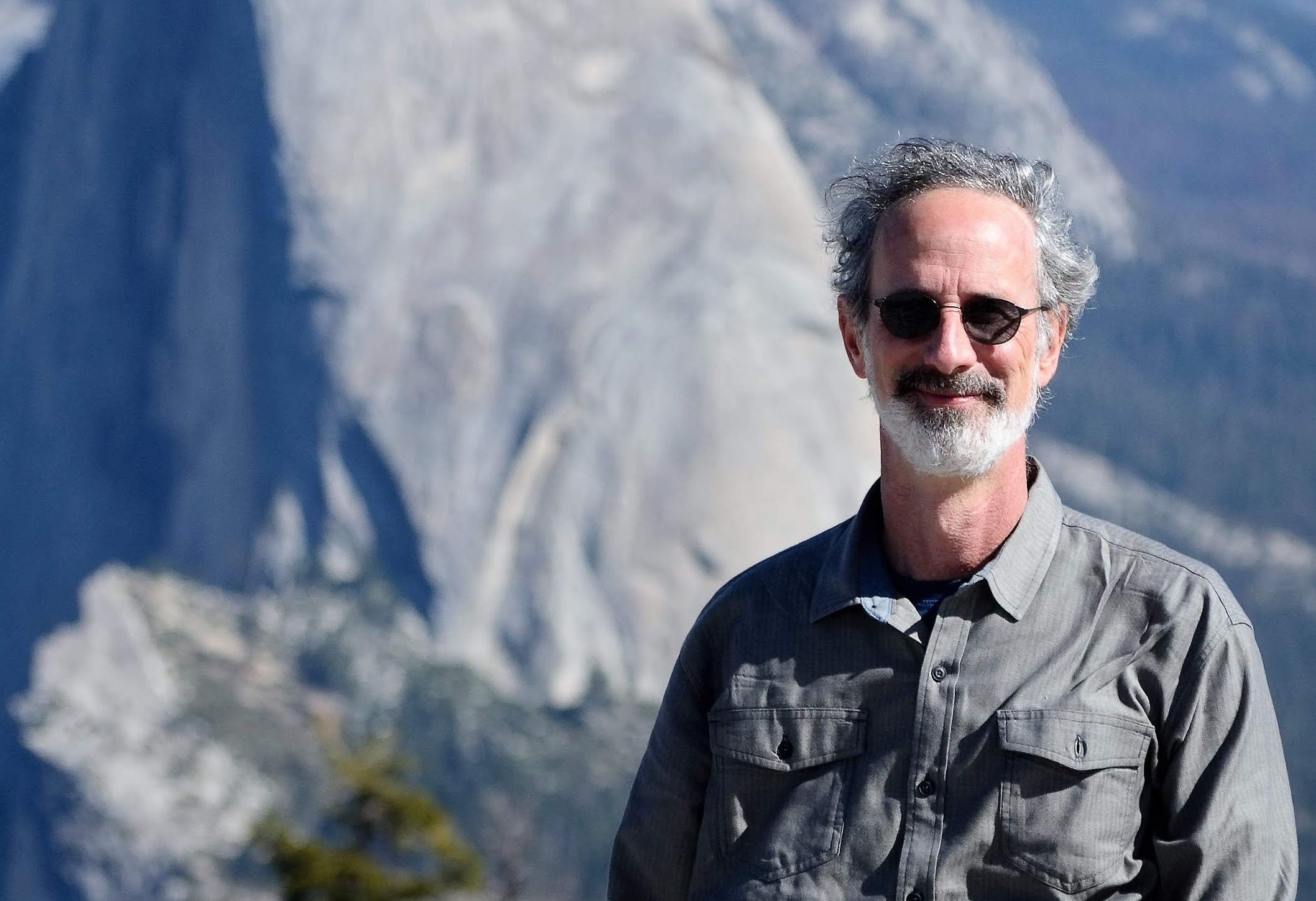
Dr. Peter H. Gleick
On water crises, human conflict, and why reconnecting with water might be the most important shift of our time.
We don't usually think about water - until it's gone.

Who is our guest?
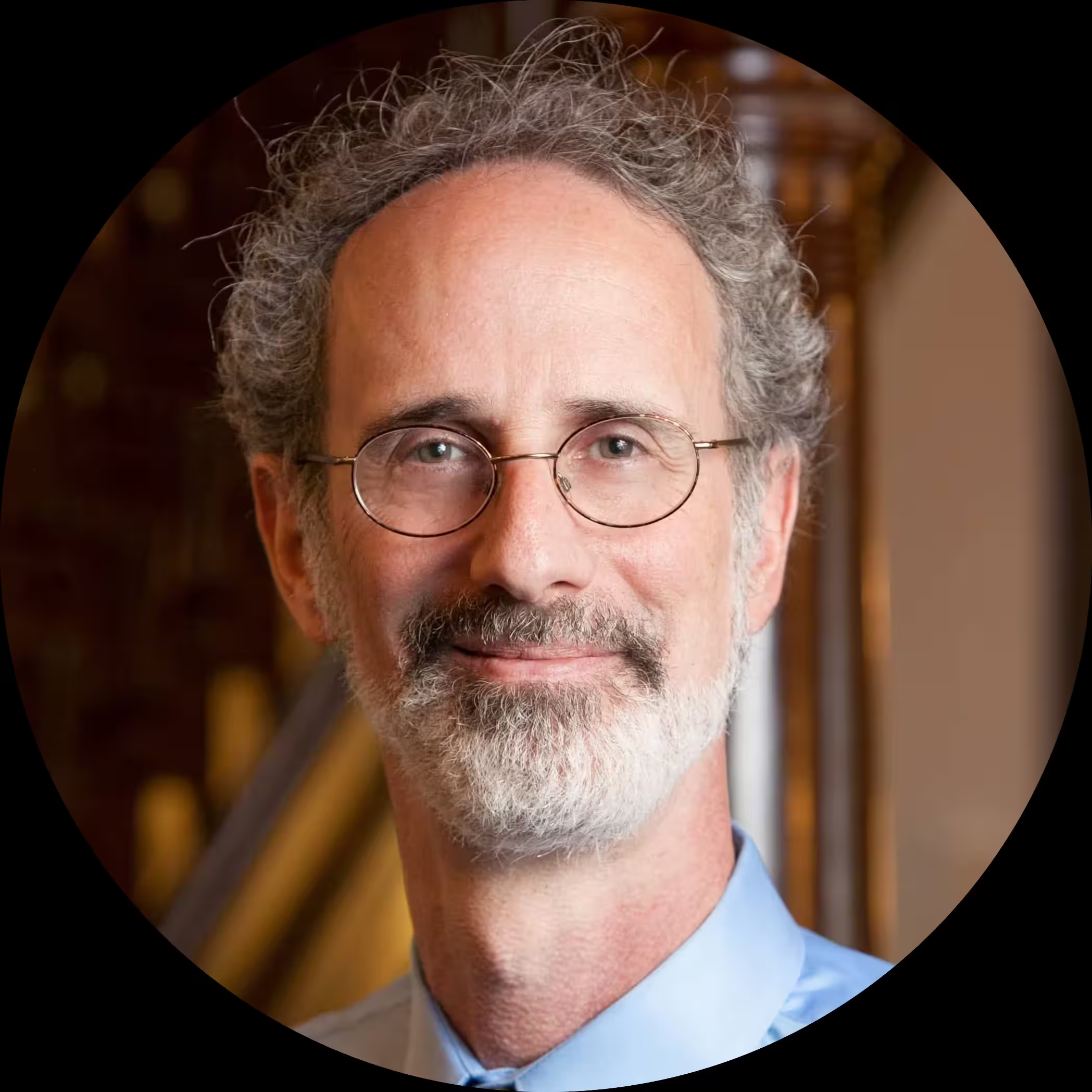
Dr. Peter H. Gleick is an American scientist, MacArthur Fellow, and co-founder of the Pacific Institute in Oakland, California - a world-renowned expert on water and climate, on a mission to prove that a sustainable water future is still within reach.
Why are we interviewing our guest?
Water shapes every civilization, every community, the food on your plate - yet most of us have lost our conscious connection to it.
What to expect
Expect an honest look at where water and humanity stand today, what a smarter path forward actually looks like, and what you and the systems around you can do about it.
The interviewer

Oliver Wegner
After 25+ years in tech, I'm dedicating my time to something that truly matters: water, our planet's most vital and overlooked resource. 💧 I'm driven by curiosity to meet changemakers whose insights and stories might inspire us all to reconnect with water.

You've been researching water for over four decades. Was there a single moment, a place, a sight, a feeling where water stopped being data and became something you felt responsible for?
I am a scientist, and data is very important to help me understand the world around me. But water has never just been data for me. It's so wrapped up with everyone's day to day existence in the way we think about life, the way we think about the things we choose to do, the environment around us.
I did a lot of work in Southern Africa in the 1990s. Apartheid had just ended. There was a new government, a spirit of excitement as the Mandela government was trying to rethink old policies including issues around water. It was my first exposure, really, to populations that didn't have access to safe and affordable water. I grew up in the United States. I turn on the tap, I get safe, affordable water. But that's not true, of course, for billions of people worldwide.
That was maybe a wake-up call for me. I've worked ever since in this area of water poverty. And I take every opportunity I can to get away from my computer and take a walk along a river or lake, so that I don't lose touch with the real world.

In your latest book The Three Ages of Water you describe a hopeful Third Age - but it requires people to actually care, to feel connected, to act. Do you think we've lost our conscious relationship with water - and if so, how do we get it back?
The book, The Three Ages of Water, talks about the long history of water, from the beginning of the universe through the earliest civilizations that had a very close connection to water.
The second age is our age - the age when we developed the technologies to expand agriculture and feed billions of people. But the second age is also the age of water crises. I do argue that we can move to a future of sustainability, that we can solve the crises of the second age and move to a more successful, sustainable future.
We haven't lost our understanding and our connection to water entirely. It takes very little for people to reconnect to water if they're exposed to nature or to water challenges in their own community.
We just have to work to build that relationship everywhere, and to make people aware that there isn't just a water problem, there isn't just a series of crises. There are solutions that permit us, if we're smart, to move to this positive third age of water.
You argue water shaped every human civilization from the beginning. Yet most people today turn on a tap and feel nothing. Is that disconnection the real crisis - and what do you observe when you talk to people across generations and cultures about it?
The disconnection is real, but the real crisis is the consequences of ignoring water problems or failing to address them. The more we can connect people to water, the more people are likely to want to understand what the problems are and then to move toward solutions.
Think about your own daily life: Do you understand where your water comes from? Where does it originate? How is it treated? How is it brought to your house or your community? What happens when you take a shower and the water goes down the drain, or you wash your dishes, or you flush your toilet and the water magically disappears? Where does it go?
The more we understand ourselves about our water systems, the more likely we are to be engaged, to want to ensure that those benefits continue, to participate in the public policy process, to talk to your legislators about protecting water quality. So if all of us think a little more and ask the question: How does water affect me in my daily life? That's an important way to rebuild some of those connections.
Looking back across your career in water - what do you know today that you wish someone had told you at the very beginning, forty years ago - and why is it genuinely important that more people know it now?
Oh, that's a tough one to ask, you know, I learn new things about water literally every day. One of the most important things for anyone interested in water, either at a personal level or even a professional level, is to understand how it is connected to everything. It's not a question of hydrology or climate or technology and engineering or economics or law. It's all of those things.
It wasn't enough to have a science degree or an engineering degree if you didn't understand economics or policy. It wasn't enough to address the economic or policy side of things if you didn't understand at least the basics of hydrology and engineering and technology.
I encourage people interested in water to take a broad view to understand that the more we know about our own cultures and societies and systems, the more likely we are to develop smart and effective solutions.
Interview break
Get to know our guest
Learn small facts about our interviewee.
Favourite place
Favourite Book
Favourite song
One piece of advice
Biggest challenge
Favourite movie/series
Your Water Conflict Chronology database covers thousands of years of water-related conflict. What patterns emerge - and what do they tell us about how humans need to value water differently?
The Water Conflict Chronology is the largest opensource database available on water and violence around the world. We look at conflicts in three ways: water as a trigger of conflict, fights over access or control of water where water is scarce. And water as a weapon - water systems as targets or casualties of conflicts that may start for other reasons.
One of the things the long history of this data tells us - going back to what some consider the very first water war in ancient Mesopotamia - is that these kinds of conflicts aren't new. But also that the number of conflicts and the extent of conflicts are accelerating very rapidly in recent years. We're seeing many more violent events associated with water and water infrastructure in the last 10 or 20 years than in previous history.
It is growing populations competing for a fixed resource - more people every day, but the same amount of water on the planet. Is it the failure of our institutions to manage water sustainably? Water poverty is a driver of conflict. We also see more and more violations of international law, where water systems are attacked and civilians are deprived of access to safe water. The more we can learn about why past conflicts over water have occurred, the more we can develop strategies for reducing those risks, for improving access to water, strengthening international laws, and managing water more sustainably.
You pioneered the concept of a "soft path for water." What does that look like in everyday life for someone in San Francisco, Jakarta, or Berlin?
The hard path is the traditional approach - build large centralised infrastructure, big dams, aqueducts. The hard path has brought enormous benefits to us. It has permitted the development of our modern societies. But it also brought unintended consequences: impacts on the environment, the failure to provide safe water and sanitation to everyone, centralised institutions that benefit some but not all. And in a world where we're running out of new sources of water, rivers running dry, groundwater being overdrafted, simply finding more supply is no longer enough.
The soft path says: let's not just think about water supply. Can we do the things we want to do with less water? Can we grow more food with smart, efficient irrigation? Can we wash our clothes and flush our toilets with better appliances that use less water but do a better job? Can we do industrial activities with less water than the traditional water-intensive processes?
Part of the soft path is thinking about demand, not supply. Part of it is taking account of ecosystems. Part of it is smarter economics and smarter institutions.
If someone is watching or reading this right now, what's the most important thing about water you want them to keep in mind - and what's the one thing they should do, starting today?
Take the care that you have about water and make it into an action, either at a personal level, or at the community level, or at a national level, or at a global level. There are so many different things that could be done and need to be done.
Even if it's just a minor personal change, a change in your diet away from water-intensive meat consumption, a change in how you water your garden, buying an appliance that uses less water. Or getting involved in your local community. Or getting involved in local politics. Bring a new set of visions and a new mindset - all the way up to global actions.
There are so many success stories in using less water, using water more efficiently, getting engaged in local communities, and protecting the environment. If we just weave them together, this soft path isn't an idea. It becomes a reality. And then we're talking about a movement.
Key Takeaways & Quotes
What stayed with us from this conversation.
Water shapes civilisation, conflict, and daily life and reconnecting with water is more urgent, and easier, than most of us realise. It starts with asking where your water comes from. The real shift is moving from supply-thinking to demand-thinking, using less, smarter, together. Every level counts, from a changed diet to a seat on your water board.







Discover more interviews like this

An interview with
Jean-Charles de Biolley
An interview with
Fainta S. Negoro

An interview with
Yanny Peñaloza

An interview with
Justina Muchelenje

An interview with
Zosia Wiśniewska

An interview with
Finnian Mollet

.svg)
.svg)