Founder
Researcher

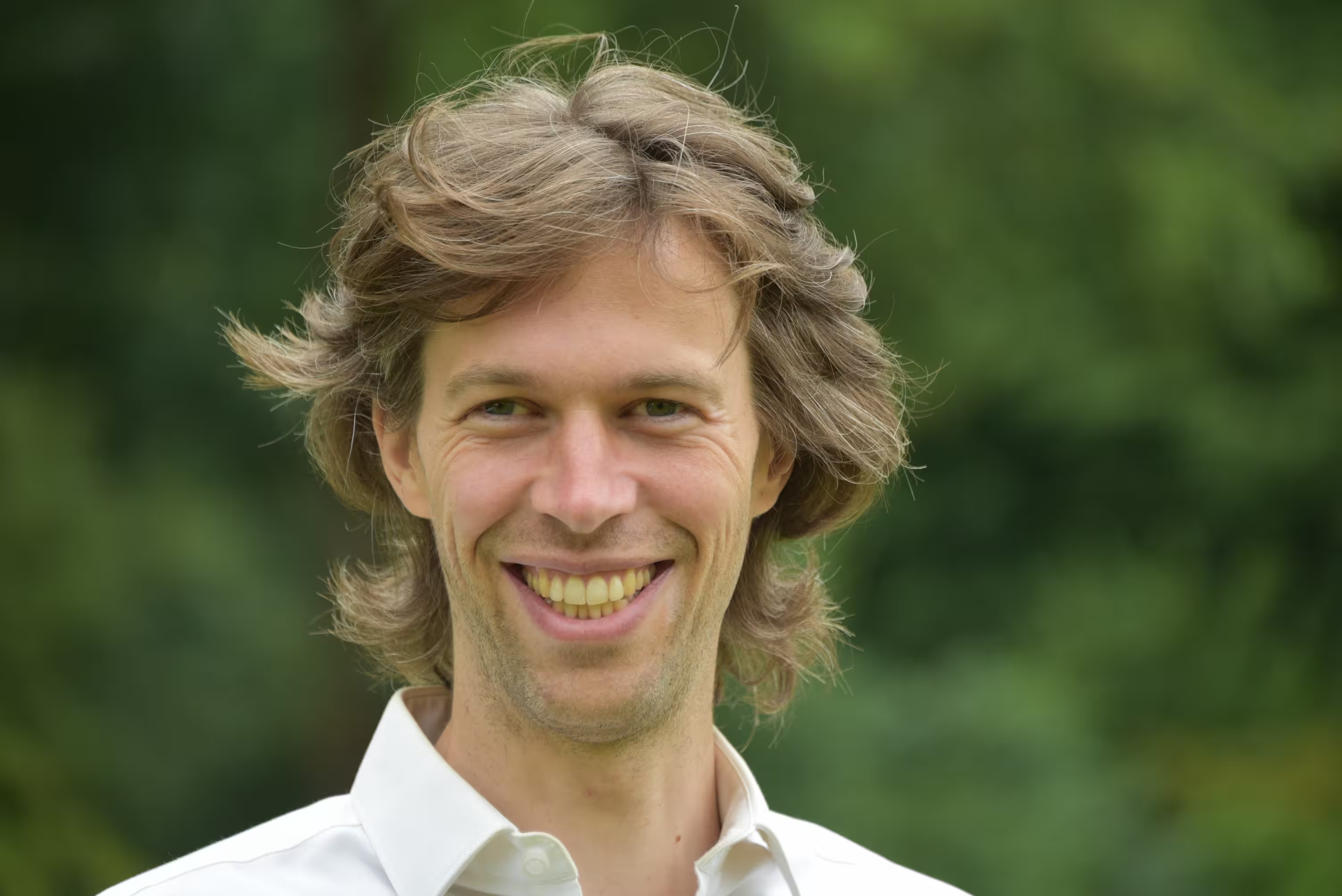
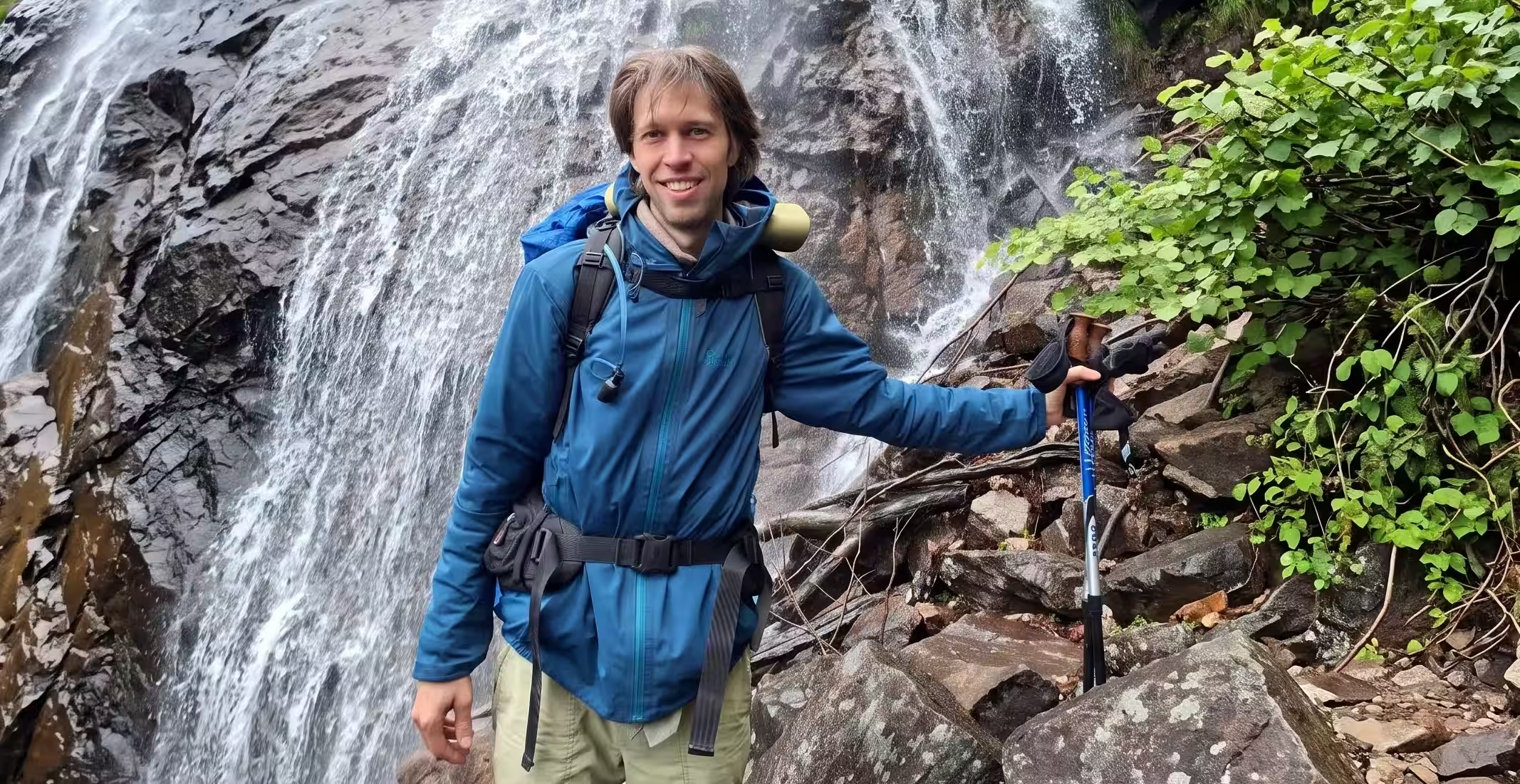
Jean-Charles de Biolley

On why water, not profit, should guide decisions, and what a decade of research taught a Belgian water advocate about reconnecting with the living.

Two glasses of water each morning changed everything.
From
Belgium
Who is our guest?
Jean-Charles de Biolley

Jean-Charles de Biolley is a Belgian self-taught water researcher who studied law and diplomacy to understand society, and founded Mouvement de l'Eau to unite citizens around water as the heart of a lively and vibrant society.

Why are we interviewing our guest?Β 

Academic papers, institutional research, decades of literature on water - too intellectual, too complex, too chaotic, no simple way to connect. Then his body suddenly rejected the water he drank. So he dropped the theory and built his own way of listening to water instead.

What to expect

A personal path from a childhood glass of water to founding a water movement, the Spiral of Water Consciousness, regenerative hydrology explained simply, and a concrete way to reconnect with water today.

The interviewer
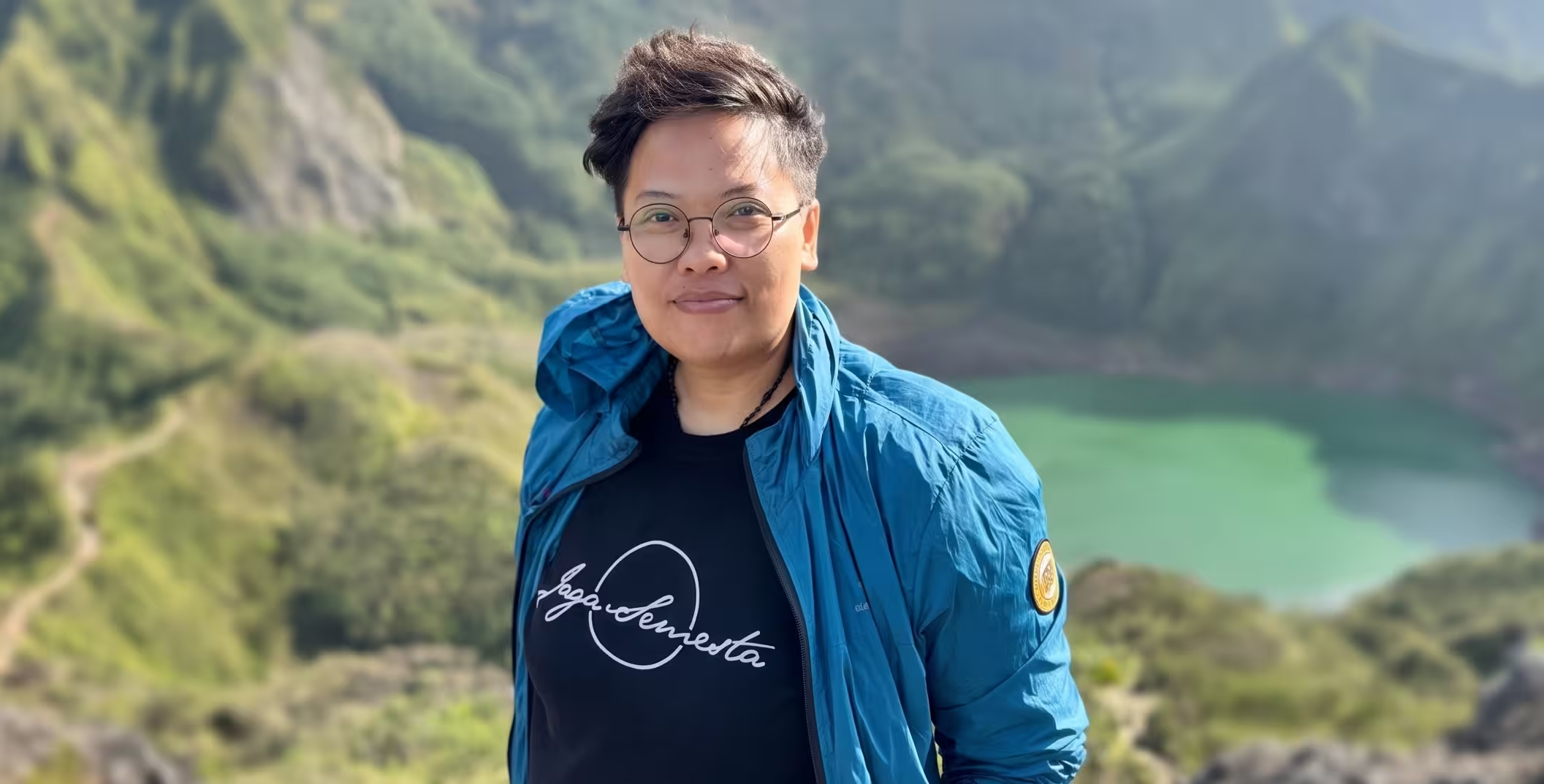
Oliver Wegner
Founder of water.day

After 25+ years in tech, I'm dedicating my time to something that truly matters: water, our planet's most vital and overlooked resource. πŸ’§ I'm driven by curiosity to meet changemakers whose insights and stories might inspire us all to reconnect with water.

Every journey has a moment that gets it started. What first drew you to water and what happened that made you realise there was something here you needed to explore?
When I was twelve, I discovered that if I drank two or three glasses of water first thing in the morning, my whole day changed. I felt clear, energised, ready and since then, it's the first thing I do every morning. I loved tap water, simple as it was. Years later, in 2015, I moved to Mechelen in Flanders and suddenly I couldn't drink the tap water anymore. It just wasn't a pleasure. That confusion became my starting point: there was something about the water, but maybe something about me was changing too. That question is where my research really began.
You call yourself a "chercheur autodidacte" - self-taught researcher. What has your work with water revealed that invites us to see it differently?
I never wanted an intellectual understanding of water. I found the literature too chaotic, full of contradictions. So, I built my own approach: measuring vibratory levels with a pendulum, testing an apple fresh off the tree against one cut days earlier, learning to trust perception over concepts. That's why I call myself a self-taught researcher. What that work revealed is simple, but often forgotten: there is no life without water with vital characteristics, visible or deep inside our cells. In our modern, patriarchal, capitalist world, we've disconnected from that basic link and from each other. If we want a healthy, vibrant society, water has to sit at its centre, at least as important a criterion for every decision as carbon is today, maybe more.
Your β€œSpirale de la Conscience de l'Eau" (Spiral of Water Consciousness) moves from drinking water all the way to water as a portal of consciousness. How can we work with this spiral in our own lives?
The spiral came out of a retreat with our team at Mouvement de l'Eau. It maps different levels of consciousness around water, from drinking water at the first level, to water as a portal to something more spiritual at the last. It's not a scale from bad to good, or higher and lower - it's a navigation map. You can be very connected to water at one level and far less at another. My advice: start wherever draws you in, follow your own pace, and when you feel ready, move to another level - not necessarily the next one in line, just the one that calls you.
The Mouvement de l’Eau brings together people from business, art, culture, spirituality and the associative world. What can emerge when these different perspectives come together around water?
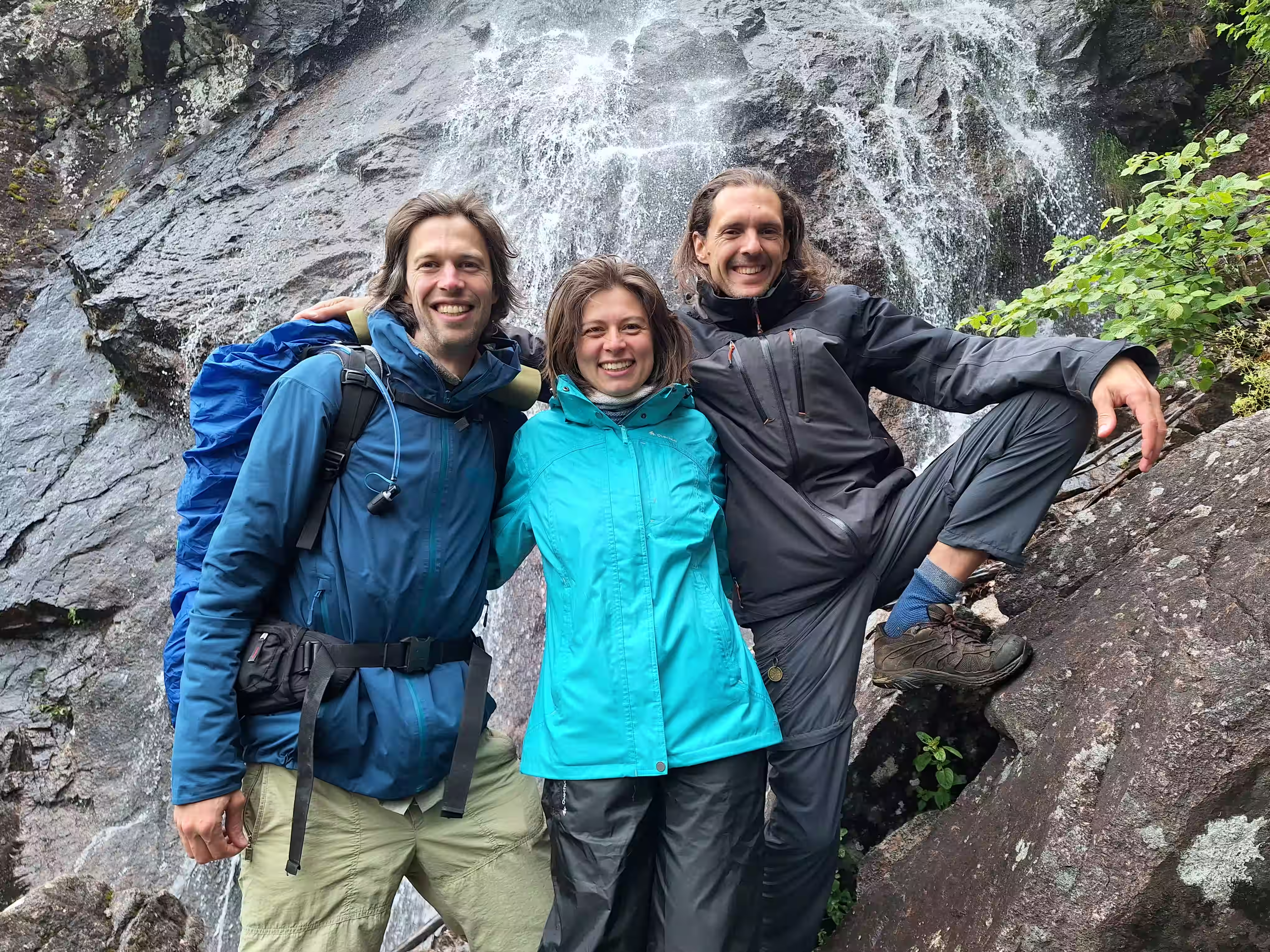
Water, to me, is a means, not an aim. It's for life, for society, forΒ people. What I discovered is that there are many initiatives around water: citizen initiatives, private associations, NGOs, governmental and international projects but they don't talk to each other. Researchers studying the quantum physics of water don't know the activists fighting megabasins in France or the effects of bottling companies like NestlΓ© and Coca-Cola on water sources. What can emerge, beyond any single project, is a collective narrative and a collective dynamic, coherence and synchronicity between different efforts, contributing to one broader vision instead of many disconnected ones. This naturally amplifies action, because consciousness is crucial, but it doesn't do anything by itself. Action is crucial, but it doesn't do anything by itself in the long term either. If you have action without consciousness, you have chaos, a spill of resources. If you have consciousness without action, you have disconnection. You need consciousness in action. So, our missions are to deepen awareness, support initiatives, and federate the most committed actors. We're also creating a foundation in Belgium, so that money can flow as fluidly as water in service of a lively and vibrant society.
Interview break
Get to know our guest

Learn small facts about our interviewee.

Favourite place
My inner world and in the mountains
Favourite Book
Life and Teachings of the Masters of the Far East - Baird Spalding
Favourite song
Imagine - John Lennon
One piece of advice
Watch and listen to the beauty of life.
Biggest challenge
To live in love and joy at every moment, whether in the hardest times or in the little annoyances of everyday life.
Favourite movie/series
Gandhi from 1982
You’ve recently started exploring regenerative hydrology as a new field of research. How can regenerative hydrology help us design a future in which humans and the living world can thrive together?
Regenerative hydrology as such is a fairly young field, born in the Anglo-Saxon world out of keyline design, pioneered by an Australian farmer, Yeomans, in the 1950s. In simple terms: instead of working on water, soil, or vegetation on their own, you work with all three together. Any project - a building, flood prevention, ecosystem restoration - needs to account for water, soil, and vegetation at once, or it won't hold in the long term. The distinction that matters most to me is restoration versus regeneration. Restoration is 100% human effort, e.g. replanting millions of trees after a fire, year after year. Regeneration is the opposite: 5% human intervention, 95% nature taking over. We can't keep planting trees at the pace fires burn them. We have to trigger the deep natural dynamics that let nature do the work - that's how humans and the living world actually thrive together.
If every decision-maker in Europe had to answer to water before answering to profit, what's the first thing that would visibly change?
It's the core of my vision that any company, any government and any individual answers to water before answering to profit. What would change first, without effort, is a culture of sufficiency, a culture of measure. Our monetary system runs on debt - 80 to 90% of the money in circulation doesn't really exist; it's virtual, created and then erased when debt is repaid. That illusion tells us resources are unlimited. Water reminds us of the opposite. You can't create virtual water. Water is the one thing every human actually needs to survive. Measuring against water instead of profit means measuring against something real and limited.Β 
Special question
What would you recommend to our readers, straight after finishing this interview, to reconnect with water?
Take a moment right now, even to notice how water is present in your mind, your spirit, and your concrete daily life. Where does it sit? Do you think of it in the shower, in a bath, at the swimming pool, in the water used to grow your food, to cook? I wouldn't prescribe any action, because everyone is ready for something different, at their own pace. Action always comes from perception and experience first. So just observe, and follow the movement you feel. If the desire to do more arises naturally, follow it and notice how it changes your relationship with water.
Key Takeaways & Quotes

What stayed with us from this conversation.

Water isn't a resource to manage - it's a relationship to life to rebuild. Jean-Charles's vision: measure every decision against water, not profit. Trigger nature's regeneration instead of endless restoration. Let consciousness and action move together. It starts with noticing your own relationship to water.

My proposition is that water be at the centre of society - its true heart.
Money is a human creation, itβ€˜s virtual. Water is not a creation, it's an element.
Discover more interviews like this