.svg)


Welcome,
!
Joining from
country
This area will display your personal quote or intention.

.svg)
Make this space your own.
Save favourites, track habits, and join the community.
Join the community
Already have an account? Sign In


The magazine of the

https://www.watermovement.world



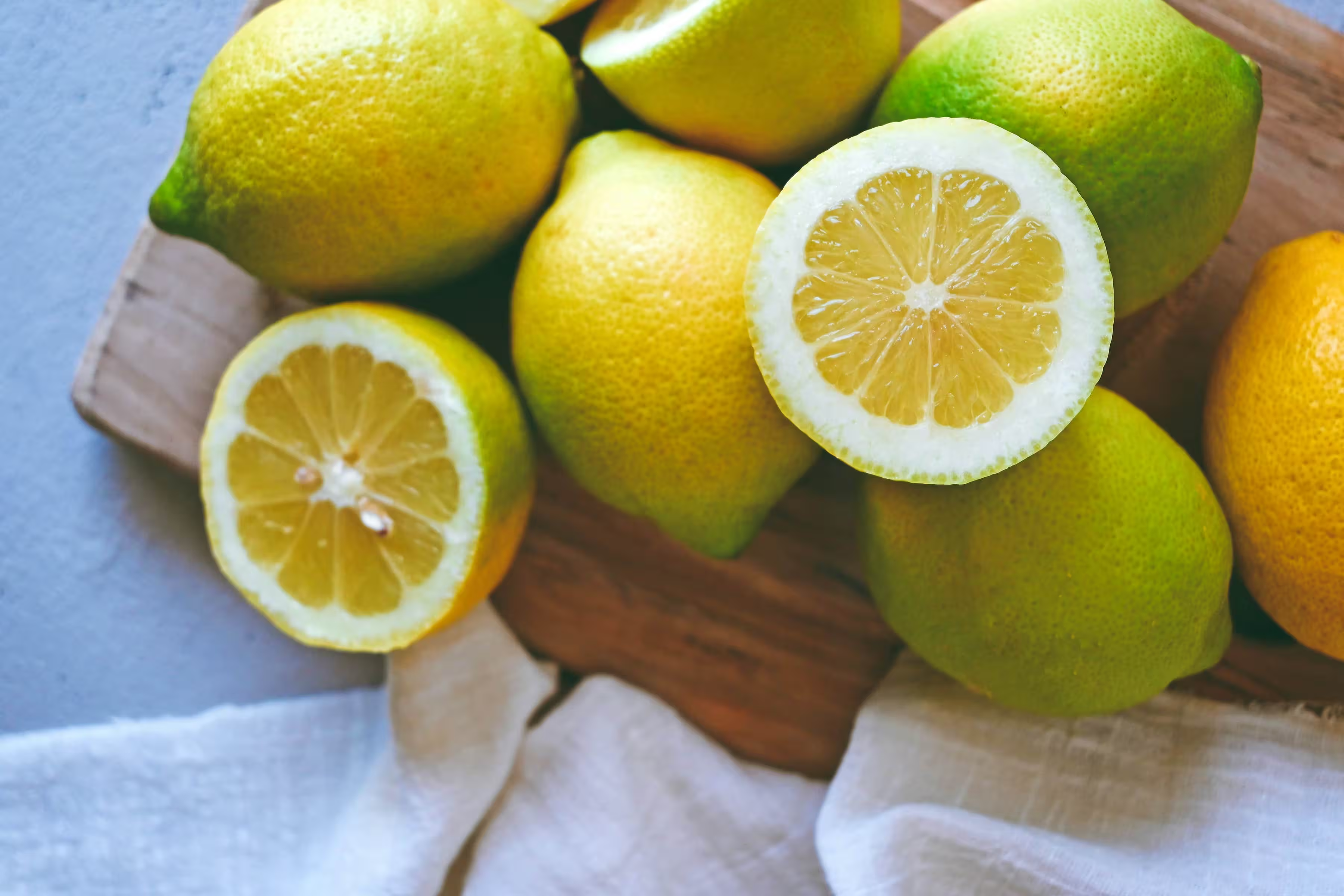
The science behind water's ability to pull flavours
Drop a lemon in water and boom - instant flavour. Your taste buds aren't fooling you.
Polar molecules party the moment something hits your water

Your water is kind of a social butterfly
Water molecules aren't just vibing—they're literally polar. Each H₂O has a slightly positive end and a slightly negative end, making it magnetically attracted to flavour compounds. Scientists using femtosecond laser pulses can now measure these hydrogen bonds directly. Think of water as having microscopic arms constantly reaching out to grab whatever you throw in there. It's a highly social overachiever at the molecular level.
The real science will surprise you
What's actually happening is called dissolution. Those flavour molecules are breaking free from your cucumber or mint and spreading throughout the water. The speed depends entirely on the chemistry of what you're infusing—some compounds are water-loving (hydrophilic) and dissolve instantly, while others are water-fearing (hydrophobic) and take their sweet time.

Pause & Reflect
When's the last time you paid attention to how fast your water changed flavour?
Why lemon hits different than ginger
Citrus fruits are speed demons. The citric acid and vitamin C dissolve almost immediately because they're highly water-soluble. You're getting those nutrients in your drink within minutes. But here's the catch: leave lemon in too long (over an hour) and those rind compounds turn bitter and aggressive. The peel releases less friendly compounds that weren't invited to the party and they will ruin the vibe fast.
Cucumber is the chill friend you need
Cucumber can literally sit in your water for days without overwhelming it. Why? It's 96% water already, with gentle hydrophilic compounds that release gradually. Unlike lemon or mint which need to be removed sooner, cucumber's mellow flavour stays balanced over time. Prep a pitcher in the morning, it'll still taste good at dinner. Cucumber is basically the friend who knows how to hang without being extra. That's main character energy.
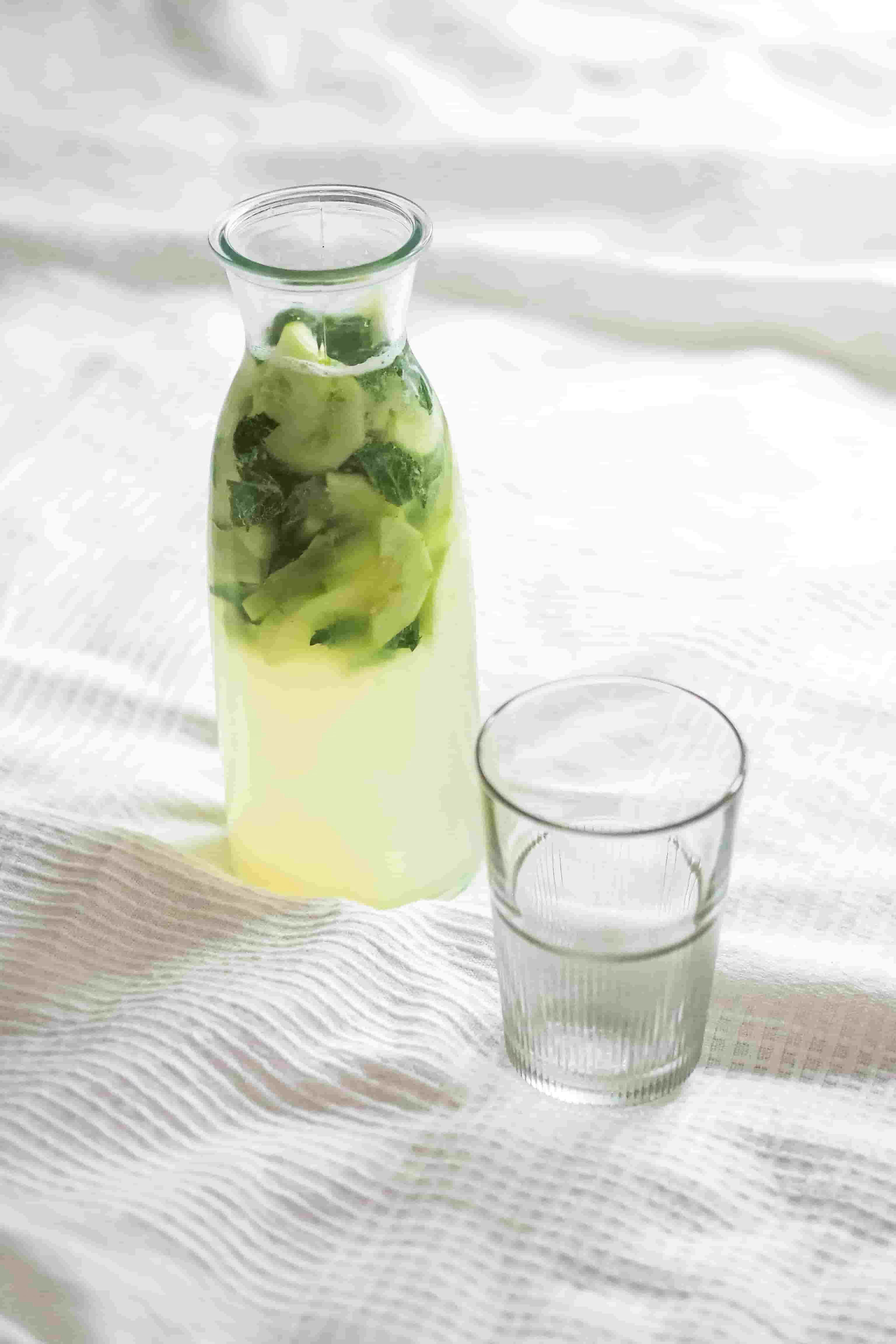
Mint is the power player (use wisely)
Fresh mint releases volatile aromatic compounds that pack serious punch. These molecules are partly hydrophilic, meaning they mix with water pretty easily. But here's the move: muddle or bruise the leaves first. This breaks down cell walls and releases oils directly into the water way faster. Leave it too long though, and you're basically drinking mouthwash. Mint doesn't mess around—it goes from spa water to toothpaste real quick if you're not careful.
Water breaks molecular bonds like a boss
Water has a unique ability to separate charged particles and pull molecules apart. Its structure acts like molecular scissors, weakening the bonds that hold flavour compounds together. When flavour molecules enter water, H₂O literally breaks them down and spreads them around. It's like water has a superpower for dissolving things that other liquids can't touch. This is why oil-based flavours need fat to dissolve, but water-soluble compounds surrender instantly to water. Chemistry at its finest.

Pause & Reflect
What if water's been working this hard for you and you never even noticed?
Temperature controls molecular speed
Warmer water makes molecules move faster—literally. At room temperature, water molecules vibrate and collide more rapidly than in cold water, speeding up the dissolution process. Heat increases kinetic energy, so flavour compounds break free from fruit cells and spread through water up to twice as fast at 25°C compared to 4°C. Cold infusions take longer but preserve delicate aromatic compounds that heat would destroy. It's a tradeoff: speed versus preserving subtle flavours.
Citrus fruits infuse into water almost instantly, while herbs can take several hours.
Vicki Hayman, Nutrition Educator, University of Wyoming Extension
Surface area makes a big difference
The more surface area exposed, the faster the infusion. Sliced fruit releases flavour exponentially faster than whole pieces because water molecules have more contact points. A single lemon slice has hundreds of times more surface area than a lemon wedge. This is why muddling works—you're creating microscopic surface area that lets water grab those flavour compounds instantly. Want that aesthetic TikTok-worthy infused water? Thin slices are the move for maximum visual appeal and flavour.

pH changes how you taste everything
Acidic ingredients like lemon drop your water's pH from neutral (7) to around 3-4. This pH shift doesn't just add flavour—it actually changes how your taste receptors respond to other compounds in the water. Lower pH enhances sourness perception and can make subtle flavours more detectable. Your tongue is literally experiencing chemistry differently. It's the same reason sour candy hits different—acid amplifies taste intensity at the receptor level.
Concentration gradients do the heavy lifting
Flavour moves from high concentration inside the fruit to low concentration in the water through osmotic pressure. The bigger the concentration difference, the faster the flavour transfer. This is why fresh ingredients work better than dried—they have higher initial concentrations of flavour compounds ready to migrate into your water. It's nature trying to reach equilibrium. Pro tip: refilling the same pitcher with fresh water actually works—there's still enough concentration inside the fruit to keep flavouring for 2-3 refills.
Closing thoughts
Water doesn't need our help to do chemistry. It's been the ultimate flavour carrier all along. We just had to slow down long enough to notice.
Did you like this article?
Other articles you might like

Dive Deep

Your AI habit is draining rivers in Aragon, Spain and Texas, US
Dive Deep
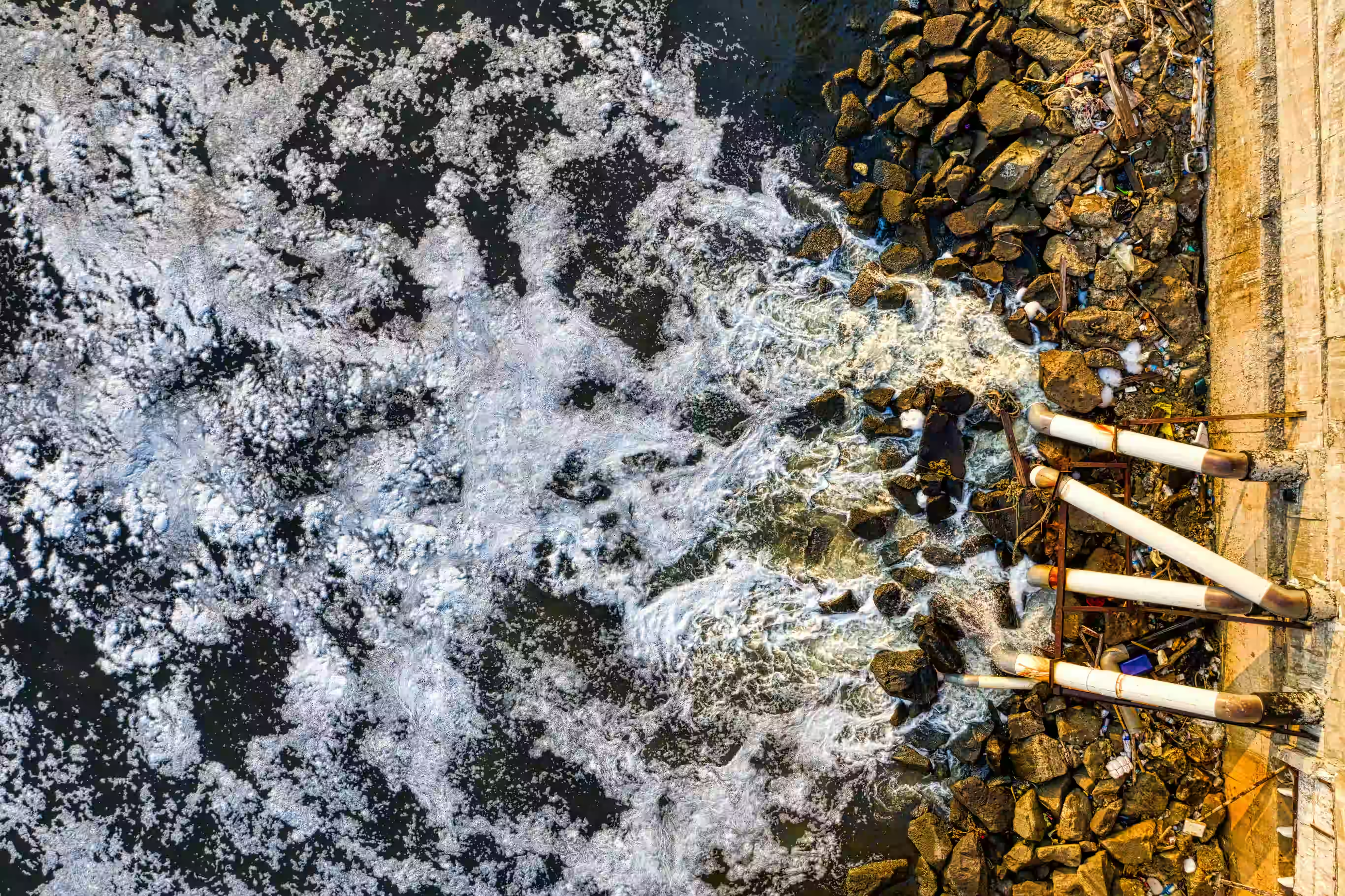
PFAS chemicals in water: what companies knew and you didn't

Dive Deep
.svg)
.svg)