.svg)


Welcome,
!
Joining from
country
This area will display your personal quote or intention.

.svg)
Make this space your own.
Save favourites, track habits, and join the community.
Join the community
Already have an account? Sign In


The magazine of the

https://www.watermovement.world



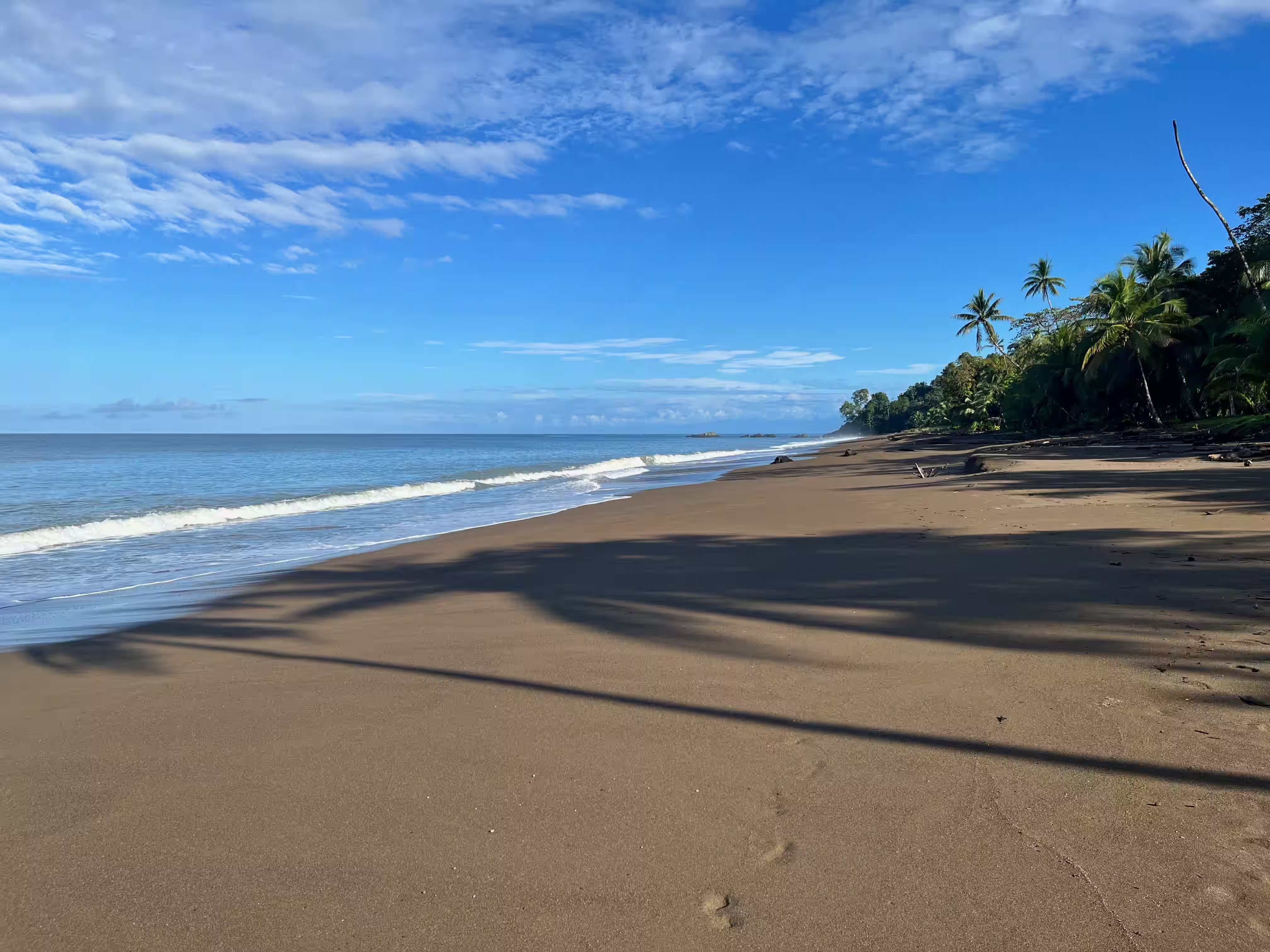
Your skin absorbs ocean minerals through pure physics
When you swim in seawater, osmosis moves minerals through your skin. Here's how to make it a practice that actually works.
Twenty minutes in the ocean isn't just swimming - it's mineral therapy.
Published
28 March 2026
Skin isn't a perfect barrier
Your skin blocks pathogens and large molecules, but it's selectively permeable to smaller ions. This is called transdermal absorption. When you're in ocean water, concentration gradients form between seawater and your skin's fluid. Physics takes over. Magnesium, potassium, and other mineral ions migrate through skin layers via osmosis and diffusion. Understanding this turns a beach day into a wellness practice.
The 20-minute ritual threshold
Research shows detectable magnesium increases after 20 minutes of seawater immersion. Your skin's outer layer initially resists ion passage. But sustained exposure allows minerals to penetrate deeper. This is why the ritual matters: set a timer, stay in for at least 20 minutes. Not a quick dip. Full immersion. Let the gradient exposure continue long enough for actual ionic transfer to occur.

Pause & Reflect
When was the last time you stayed in the ocean for a full 20 minutes without interruption?
Temperature changes the ritual
Warm water increases skin permeability by dilating blood vessels near the surface. Cold water initially restricts surface blood flow but offers different wellness benefits like brown fat activation. Your location determines your approach: Mediterranean or Caribbean swimmers can optimize mineral absorption easily. Atlantic, Pacific, or North Sea swimmers should extend immersion to 25-30 minutes and keep moving to maintain circulation. Both temperatures work—just differently.
What actually crosses the barrier
Smaller ions cross more easily than larger ones. Magnesium ions measure about 0.14 nanometers in hydrated form. Sodium is similar. These navigate between skin cells and through watery channels. The ocean's ionic minerals have advantages over supplement molecules. This is why ocean swimming feels different than pool swimming—your body is literally absorbing a different chemical profile.
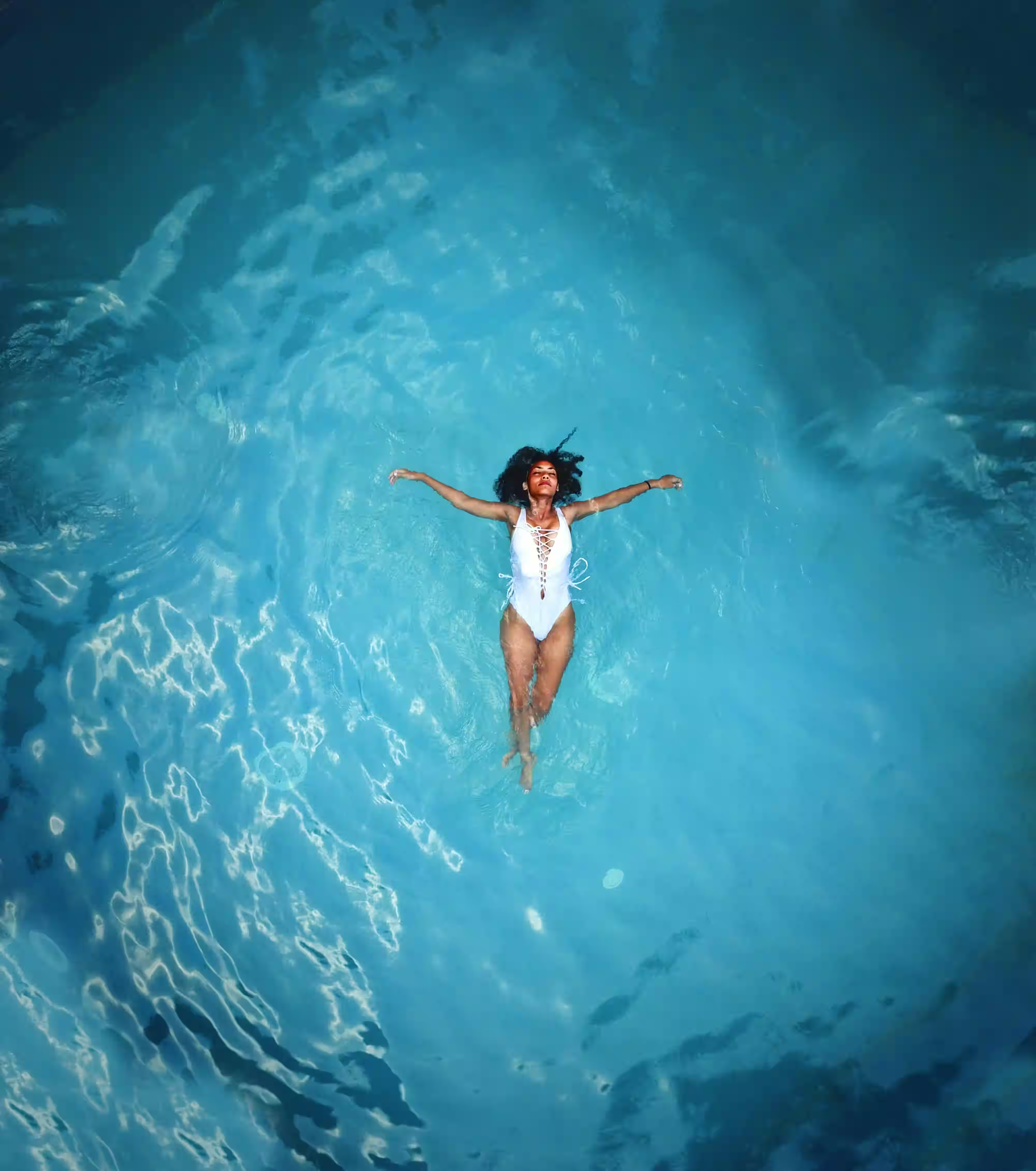
The drinking ritual requires dilution
Drinking diluted seawater - properly prepared at isotonic concentration - allows mineral uptake through intestinal absorption. The small intestine has specialized transport proteins for minerals. The ritual: three parts spring water to one part ocean water. This matches your blood's concentration. Never drink straight seawater - it's hypertonic and causes cellular dehydration through reverse osmosis. Dilution is essential.
Quinton's century-old protocol
René Quinton's early 1900s work demonstrated that isotonic seawater - diluted to match blood plasma concentration - could be used therapeutically. His protocols showed the body recognized marine plasma similarly to its own fluids. The solution he developed: microfiltered ocean water, precisely diluted, taken orally or used topically. Modern practitioners continue these protocols, treating seawater as medicine rather than just environment.

Pause & Reflect
Have you ever considered ocean swimming as an actual health practice rather than just recreation?
Building your ocean mineral ritual
If you live near the ocean: immerse for 20+ minutes, 2-3 times weekly. Choose warmer times of day. Stay still occasionally to let minerals settle on skin. If inland: seek mineral baths using authentic sea salts, or source microfiltered seawater supplements. The key is consistency. Single exposures provide temporary contact. Regular practice - daily or several times weekly - creates repeated absorption opportunities.
The living organism is a sea aquarium in which a few billion cells are bathing.
René Quinton, French biologist and founder of marine therapy
The breathing component matters too
Ocean spray creates aerosols—tiny seawater droplets suspended in air. When you breathe near waves, you inhale these mineral-laden particles. The respiratory tract's mucous membranes have high surface area and blood flow. Inhaled minerals absorb through nasal passages and lung tissue. The ritual: spend time in the spray zone. Let waves crash nearby. Breathe deeply. Three absorption routes working together: skin, gut, lungs.

Post-ocean ritual: don't rinse immediately
After ocean immersion, many people immediately shower with fresh water. Consider waiting 20-30 minutes. Let the mineral-rich water dry on your skin. The ions continue working even after you exit the water. Pat dry gently rather than vigorous toweling. This extends the absorption window. When you do rinse, use lukewarm water—hot showers close the pores you just opened.
Start simple, then go deeper
Begin with basic immersion—just get in and stay in. Once comfortable, experiment: try underwater meditation, combine swimming with breathwork, or practice cold adaptation gradually. Some practitioners drink diluted seawater before swimming for dual absorption. Others create monthly moon-tide rituals. The practice evolves with you. Start where you are. Layer in techniques as you notice what your body responds to. Ritual deepens through experimentation.
Closing thoughts
Your body and the ocean exchange minerals through basic physics. Turn beach days into intentional ritual - and you'll feel the difference in your energy, skin, and sleep.
Did you like this article?
Other articles you might like

Dive Deep

Your AI habit is draining rivers in Aragon, Spain and Texas, US
Dive Deep
PFAS chemicals in water: what companies knew and you didn't
Dive Deep
.svg)
.svg)